
Photo: Collected
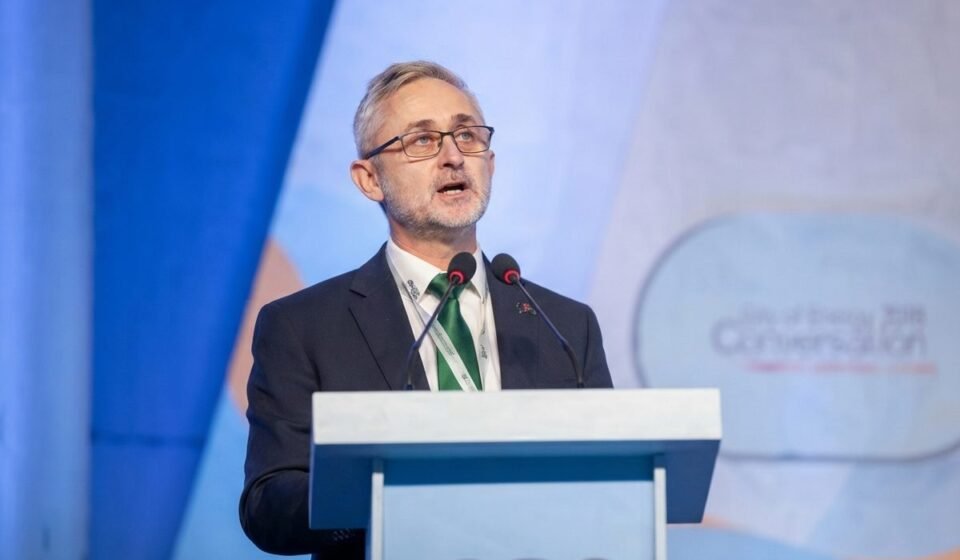
European Union (EU) Ambassador to Dhaka Michael Miller has described Bangladesh’s role in South Asia, the Bay of Bengal region and the entire Indo-Pacific region as extremely important. He said Bangladesh is now one of the most dynamic economies in the world and the country is going to be one of the world’s top 30 economies by 2030.
He said this in his speech at the ‘Bay of Bengal Conversation’ held at the Pan Pacific Sonargaon hotel in the capital on Sunday (4 October).
According to the ambassador, Bangladesh has arrived at an important turn in its development journey. Graduation from the list of least developed countries (LDCs) is one aspect of this. Alongside that, the country has to move forward through everything – managing the political transition, reviving accountable state institutions, economic pressures, climate risks and a complex external environment.
He said that in this context Bangladesh is being seen as a partner of growing strategic importance. The European Union now wants to view this relationship not from the traditional perspective of donor and aid recipient, but with a different level of ambition.
Michael Miller said the EU is keen to work together to ensure Bangladesh’s smooth and successful graduation from LDC status. At the same time, the bloc also wants to explore the possibility of a potential free trade agreement (FTA) in the future. Such an offer from the European Union even before graduation from LDC status is a first and unique initiative in history. However, he also remarked that it must first be seen whether there is sufficient common ground between the two sides for a potential FTA.
In this connection, the ambassador cited the examples of the European Union’s free trade agreements with India and Vietnam. He said the success of such an agreement with Bangladesh will depend on accountable institutions, the rule of law, respect for labour rights and human rights, environmental conservation and good governance. These are the real core issues; they are not secondary at all.
He further said that, alongside political reforms, a skilled workforce, green growth, a more diversified export sector and reliable infrastructure are needed. He stressed building strong institutions and oversight systems to attract domestic and foreign investment and create meaningful employment for young people.
Presenting the EU’s special offer for Bangladesh, Miller said the bloc wants to bring technology, standards, long-term capital and innovation by combining European investment with European values. As examples, he mentioned initiatives such as the Laldia Container Terminal in Chattogram and the issuance of ‘green bonds’. In his view, a major value addition of the European Union’s offer is its experience and expertise in public administration reform. The EU wants to share with Bangladesh the experience of various European countries in making the transition from dictatorship to democracy and in reorganising politics, the economy and society.
He said this offer is being made with the goal that Bangladesh can move ahead while coping with global competition, can modernise and, at the same time, can remain open, sovereign, resilient and connected.