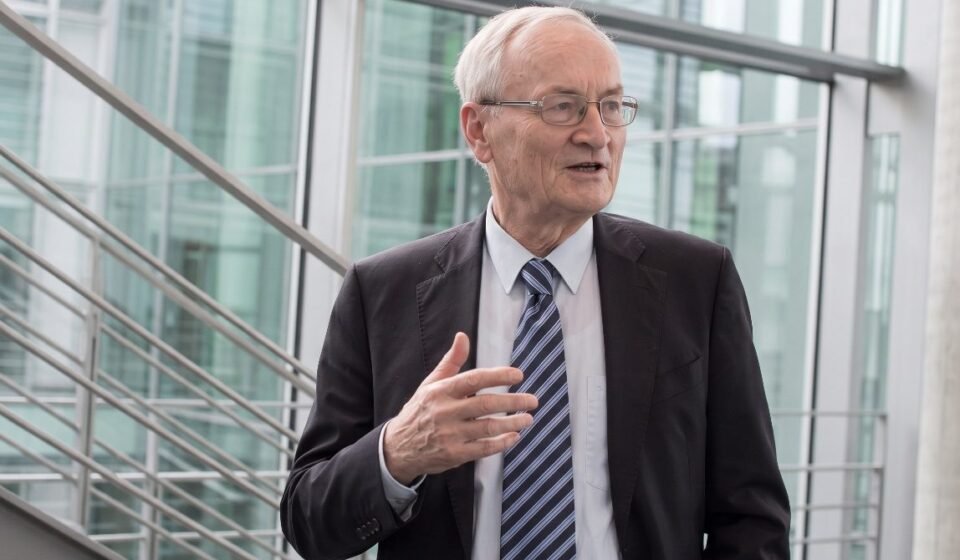

Photo: Collected
British intelligence agencies have begun examining whether the UK’s secret information and the identities of intelligence agents have been exposed in the biggest espionage scandal in Germany’s modern history. This major security concern has arisen after the arrest of August Hanning, former chief of Germany’s foreign intelligence agency BND, and a senior official of the agency, ‘Manfred D’. They were arrested on charges of espionage and treason.
It is alleged that August Hanning had been illegally collecting classified or highly secret BND documents through Manfred D for a long 16 years and also sold part of them to a foreign state. Sources linked to German security agencies said that part of the high-level sensitive information the two arrested men traded had come from foreign allied intelligence agencies. This has created a strong fear that UK and US intelligence has changed hands. At the same time, there is also fear that the identities of US and British secret agents or informants working in the field have been exposed.
The Western intelligence community has expressed deep astonishment at this sudden scandal. The sources concerned described the leak as a major success for a hostile or foreign power and as extremely damaging for the Western intelligence-sharing alliance. It has been learnt that the UK’s MI6 and GCHQ, along with several US agencies, are conducting a thorough internal review of all sensitive information shared with European allies during the period concerned. Their main aim is to protect the human assets and agents who may be put in danger because of this leak. Germany’s other intelligence partner countries are also believed to have begun similar audits.
It is not clear exactly when, before the arrests, German officials informed the allies of this security breach. However, it is believed that the allies were notified of the matter before the arrests. According to German media reports, the leaked information includes classified documents on Iran’s nuclear programme, Russia’s military and foreign partner agencies.
August Hanning retired in November 2005 after serving as BND chief for six years. He later fell into a severe financial crisis and stood on the verge of bankruptcy. Meanwhile, his chief of staff at the time, Manfred D, later also worked with Hanning at the interior ministry. Then, from March 2012 to March this year, he was chief of staff to several BND presidents. By virtue of this post, he had an extremely important role in controlling the flow of information to the BND president’s office and in determining which intelligence would be provided and when.
Every intelligence agency observes certain boundaries as a strategy for keeping its own information secret. However, being a very senior official, Manfred D had wide access to almost all the intelligence the BND received. Germany’s Federal Prosecutor’s Office said he is suspected of having supplied about 2,000 documents to former chief Hanning. In the spring of 2010 a financial agreement was struck between the two, under which Manfred D regularly sent valuable BND intelligence to his former chief in exchange for money. According to the prosecutors, many of the documents traded contained highly secret information that had been prepared only for internal work and specifically for delivery to top executives.
The prosecutor’s office said August Hanning used this information in his private advisory or consulting work. In at least one instance, he prepared an analytical report for a foreign intelligence official using classified intelligence obtained from Manfred D. However, whether that document ultimately reached the intended recipient is still under investigation. German news outlet Der Spiegel reported that the analysis was prepared for Azerbaijan’s intelligence agency.
Yet in recent times Hanning had taken quite a tough stance against Moscow in discussions on national security. In an interview in 2024, he warned Germany that the country was thinking in a highly unrealistic or naive way and needed to be alert to the reality of a possible war. He said many people did not understand that a conflict with Russia was already under way and that it was being played down. People were avoiding the truth, because Russia was in conflict with NATO and Germany was certainly part of that conflict. There was sympathy for Russia particularly in eastern Germany and among the far left and far right, who were demanding that sanctions on Moscow be lifted. According to investigative news outlet The Insider, Hanning visited Russia at least seven times after leaving the BND. On these visits, made between 2015 and 2019, he often stayed in Moscow for just one day at a time.
The agency’s current president, Martin Jaeger, said the BND launched an internal investigation very quickly at the outset and it confirmed the initial suspicion. Stating that the BND would make no compromise on the question of internal security, he said none of his goals or priorities would be disrupted because of this incident.
Former MI6 intelligence officer Matthew Dunn said British intelligence agencies are thoroughly reviewing all information shared with the BND and examining how much risk this may create. Such an incident, after sharing information with a highly reliable partner agency, has given rise to an extensive review process inside MI6 to understand whether information on any operation or agent has been exposed. However, in his view, the incident will not cause a rift in the good relations with the BND; he also expressed hope that the two agencies would continue to work jointly. He further said that, when any intelligence is given to another country, there is a rule in place to automatically conceal or redact the sources of the information and the names of important individuals.