



Photo: Collected
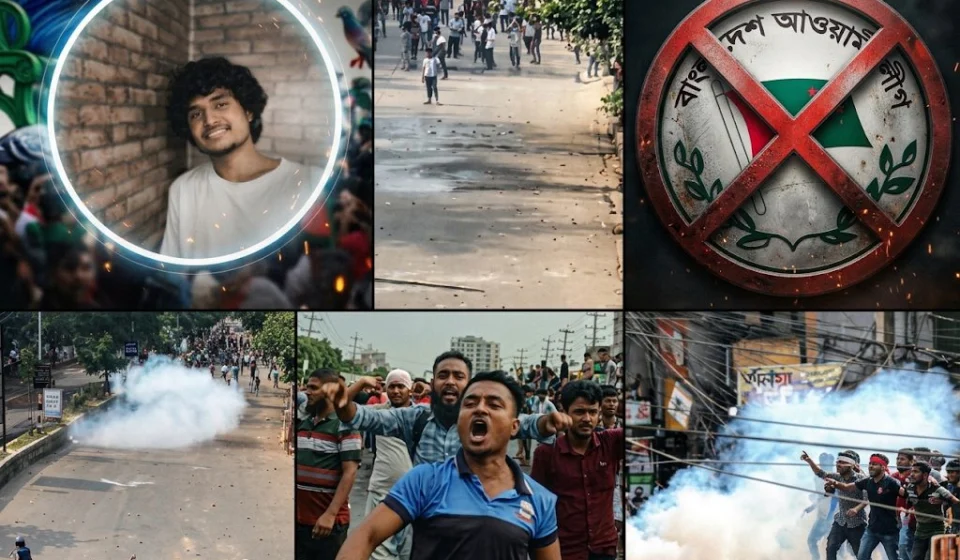
Allegations have emerged that leaders and activists of the Awami League, whose activities are banned, and its associate organisations are behind the unrest seen in various areas surrounding the ongoing movement demanding a minimum wage of Tk 30,000 for garment workers. A reliable source claims that leaders and activists of the party’s banned student organisation, Chhatra League, have become active on the ground using the workers’ movement as cover. Several Chhatra League leaders and activists have also reportedly been detained in this connection.
Chhatra League leaders and activists at various levels have also been seen posting photos and videos of their participation in the movement on social media. These posts show scenes of various programmes as well as their participation. Sajibul Islam, organising secretary of the Jagannath University unit of Chhatra League, incited people by posting several photos and videos on his Facebook account. Along with a photo posted at 2:17pm on Sunday, he wrote, ‘Bangladesh Awami League will not come to power riding on anyone. We will announce programmes with the strength of the people.’
He had posted a video 51 minutes before that post. Sajibul also posted another video at 12:51pm and a post about the workers’ movement at 10:06am. That post read, ‘The workers’ movement is continuing today for the fourth consecutive day demanding a wage increase of 30000.’
Before that, at 6:24pm on Saturday (31 October), he posted a video of a fire being set. The slogan ‘Give 30 thousand wage, or give up the throne’ can be heard in that video.
Garment workers have been protesting for several days demanding that the minimum wage be set at Tk 30,000. The movement, which began with a demand for higher wages, has gradually turned heated in various areas, with vandalism, arson and clashes. Allegations of involvement by leaders and activists of political organisations in these incidents have also come to the fore.
On Saturday, protesters clashed with police in Mirpur in the capital. Train services were then suspended for some time at the Mirpur-10, Mirpur-11 and Pallabi metro stations. A police vehicle was also set on fire at Mirpur-11.
Law enforcement agencies said 11 people, including leaders and activists of the Awami League and its associate organisations, have been arrested on charges of sabotage, vandalism and arson centring on the movement.
Garment workers took to the streets again in Kaliakair, Gazipur from Sunday morning. At one point they blockaded the Dhaka-Tangail highway. There have been allegations of fires being lit on the road and of vandalism of banks, vehicles and shops. This halted traffic on both sides of the highway. Members of Border Guard Bangladesh (BGB) were deployed there to bring the situation under control.
Discussions are under way about political involvement in this movement, which began with a demand for higher wages, and about who is behind the violent incidents. In particular, the photos and videos posted on social media by Chhatra League leaders and activists, and the allegations of political involvement, have raised fresh questions.
At a glance
According to a Dhaka Tribune report of 23 October 2024, Bangladesh Chhatra League was banned that day through a gazette notification issued under section 18(1) of the Anti-Terrorism Act, 2009.
According to a home ministry notification, the activities of the Awami League and its front, associate and fraternal organisations were banned on 12 May 2025 under the Anti-Terrorism (Amendment) Ordinance and the Anti-Terrorism Act — The Business Standard reported this that day.
According to a Prothom Alo report of 9 April, the Anti-Terrorism (Amendment) Bill was passed by voice vote in parliament on 8 April. As a result, the Awami League’s activities will remain banned until the trials of the party and its leaders at the International Crimes Tribunal are completed.
Sources
Original report: Bangladesh Pratidin
Background sources: Dhaka Tribune, 23 October 2024; The Business Standard, 12 May 2025; Prothom Alo, 9 April 2026