






Photo: Collected
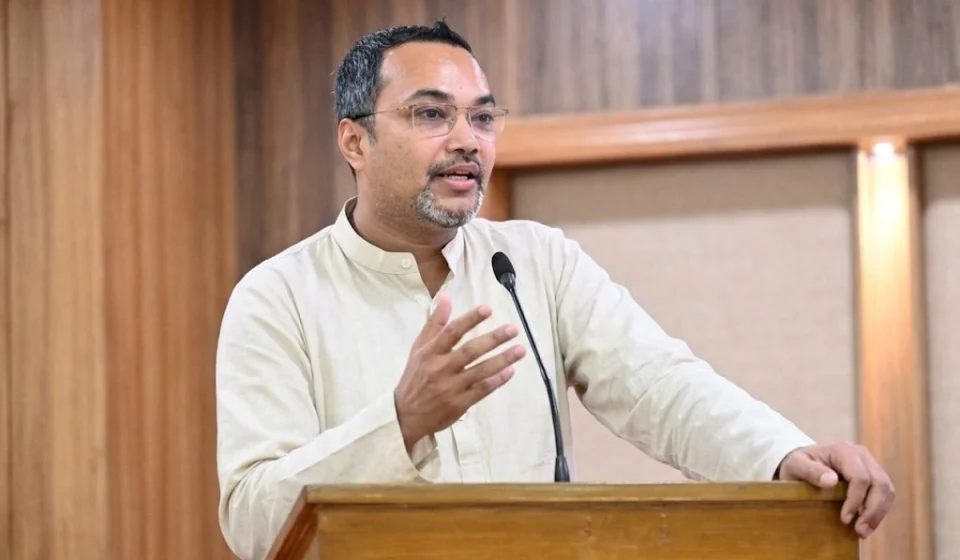
The government is moving ahead with a specific target of getting 4,000 megawatts of electricity from the solar sector within the shortest possible time. Mahdi Amin, adviser to the Prime Minister and spokesperson of his office, said various initiatives have been taken to use the country’s own energy resources, reduce dependence on foreign sources and provide policy support to key drivers of the economy such as the garment industry.
Global Compact Network Bangladesh organised a conference titled ‘Sustainability Day 2026: New Frontiers for Growth’ at Hotel Renaissance in the capital on Wednesday morning. He made the remarks while speaking there.
Mahdi Amin said work on providing policy support to speed up the energy transition has already begun. The budget has kept special tax exemptions for solar power projects and solar panel manufacturing, along with additional facilities. The government does not just want to increase power generation; it wants a self-reliant supply system and a strong value chain.
On national energy sovereignty, he said exploration of the country’s own gas wells is under way. Work on installing new FSRUs and assessing the feasibility of coal is also progressing. The technical expertise of international partners will be used, but the current policy is to reduce permanent dependence on imports and strengthen sustainable energy security with the country’s own resources.
The adviser said the government is working with a clear vision for a sustainable energy system, keeping infrastructure development and a sustainable environment in mind. Increasing renewable and reusable energy capacity is now the government’s top priority. Solar power is a key part of this, and that is why a target of generating 4,000 megawatts from the solar sector has been set.
Call to create resources from waste in all industries
Mahdi Amin said turning waste into resources is also getting special importance alongside solar power. He said electricity, gas and reusable water can be obtained from industrial waste, untreated water and chemical waste if they are made usable.
He said waste is not just something to be thrown away or removed. Turning it into an economic resource is the modern global method today. He called for successfully incorporating this environment-friendly process in every industrial sector of the country.
Garment sector, the lifeblood of the economy
In Mahdi Amin’s words, the garment sector is the main lifeblood of the country’s economy, and the government is deeply proud of the sector’s historic legacy. The industry began its journey in the country under BNP founder Shaheed President Ziaur Rahman. The present government is working while upholding the rich tradition of policy benefits of that time for the growth and protection of the industry.
Stressing expansion of the export basket and sustainable development, he said diversity must be brought to garment products to sustain the progress of the macroeconomy. At the same time, other promising export sectors must also be taken forward. The government’s policy support of all kinds will continue to make the industry self-reliant by following global standards and using modern technology and creativity.
He also spoke of keeping inflation under control, and stressed making workers’ education, healthcare and living standards meaningful and dignified. Mahdi Amin also pledged a suitable working environment and protection of rights for women to sustain the historic trend of women’s empowerment that emerged as millions of women joined work in the garment industry.
Background
According to a Risingbd report of 3 November 2026, Prime Minister Tarique Rahman said that day that the government has set a target of adding 3,000 to 4,000 megawatts of solar power to the national grid before the start of the next summer season. He also spoke of allocating an initial fund of Tk 1,500 crore to make financing for solar power easier.
By the numbers
According to a BSS report of 7 May 2026, the country was then producing a total of 1,451 megawatts of solar power, which is about 5.01 per cent of the country’s total power capacity.
Sources
Original report: Bangladesh Pratidin
Background sources: Risingbd, 3 November 2026; BSS, 7 May 2026