







Tk 48 crore project to re-excavate 41km of Mogra river begins in Netrokona

Photo: Collected
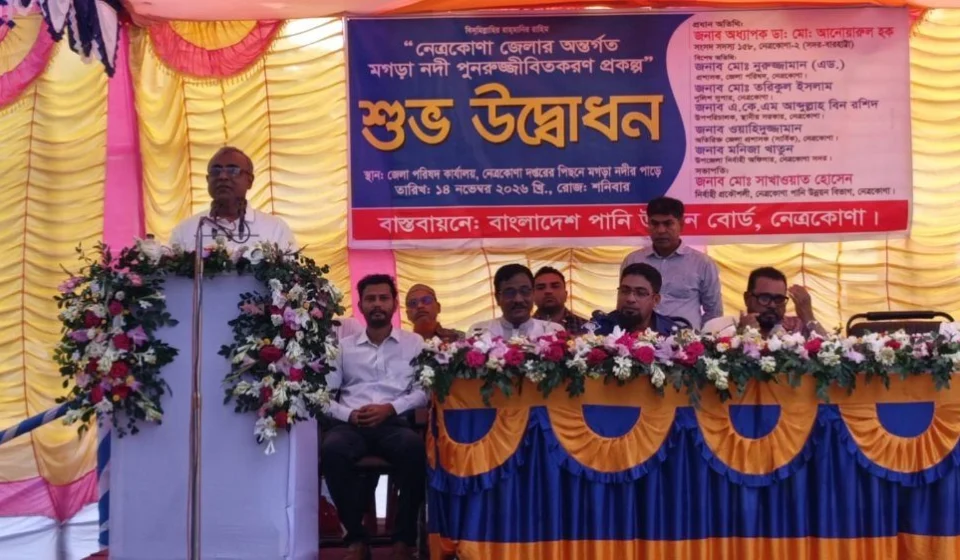
Work began today on the ‘Mogra River Revitalisation Project in Netrokona District’, undertaken to bring the Mogra river back to life.
Netrokona-2 (Sadar-Barhatta) MP and district BNP president Prof Dr Md Anwarul Haque inaugurated the work as chief guest at an event on the bank of the Mogra behind the zila parishad office on Saturday afternoon.
The event was presided over by Bangladesh Water Development Board Netrokona district office executive engineer Md Sakhawat Hossain. Special guests included zila parishad administrator Adv Md Nuruzzaman, superintendent of police Md Tarikul Islam, Local Government Division deputy director AKM Abdullah Bin Rashid, additional deputy commissioner (general) Wahiduzzaman and Sadar upazila nirbahi officer Monija Khatun.
Chief guest Anwarul Haque said recovering rivers is part of the current government’s election pledges; the environment will not be allowed to be destroyed because of a handful of encroachers. Strict legal action will be taken against anyone who obstructs the recovery work.
He said a delegation from the United Kingdom will soon visit Netrokona under a public-private partnership (PPP) framework. Under this initiative, plans have been made to produce fertiliser, organic fertiliser and biogas from waste without spending any money from the municipality’s own funds. After the digging, walkways, plenty of trees and lighting will be provided on both banks to create an attractive, walkable environment for townspeople.
Water Development Board executive engineer Md Sakhawat Hossain said that under the project, with an estimated cost of about Tk 48 crore 49 lakh 70 thousand, a total of 41 kilometres of the river, from kilometre 56 to kilometre 97, will be re-excavated. The project’s main work also includes evicting one thousand and four illegal structures on the riverbank and 1.60 kilometres of landscaping. The river’s natural flow and navigability will be restored by removing residential and commercial waste and water hyacinth; he said this will protect about five thousand 560 tonnes of food grains from flood damage.
Sources
Original report: BSS