


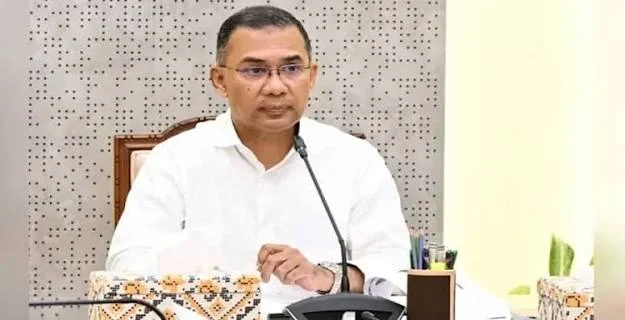

Photo: Collected
The ministries concerned, the administration and law enforcement agencies have been told to take a firm line to prevent any unrest in the readymade garment industry and to keep the country’s law and order situation normal. The directive came from Prime Minister Tarique Rahman. It also says immediate action must be taken if any attempt is made to disrupt the economy and the export sector through provocation, sabotage or conspiracy from inside or outside the country.
The Prime Minister urged ministers, state ministers and public representatives to stay active in their respective areas to keep the situation normal. They were also warned that anyone who fails in their duties will be held accountable.
The directives came out of yesterday’s cabinet meeting. The meeting began at 9:30am in the meeting room of the Cabinet Division at the Bangladesh Secretariat and ran until 11:30am. The Prime Minister chaired the meeting, which lasted about two hours. Ministers and state ministers attended, along with government officials concerned.
The meeting discussed in detail the recent unrest in the garment sector, labour discontent, the law and order situation and the country’s political context. The garment industry is the country’s main export sector, and the government has given top priority to keeping its production and supply chain running normally.
The meeting was told that the minimum wage board had been formed ahead of schedule. This was done with workers’ legitimate demands and the improvement of their living standards in mind. The board’s third meeting is scheduled for today. The discussion noted that while the wage-setting process is under way, violence, vandalism or road blockades in the name of labour protests could make the situation even more complicated.
The government’s position is that there is room to settle workers’ demands through dialogue. But if any party tries to use the workers’ movement to destabilise the garment industry, action will be taken against them.
During the review of the law and order situation, intelligence information and various field-level reports were placed before the cabinet. According to these, some miscreants, leaders and activists of banned political parties, and extremists are trying to create chaos under the cover of ordinary workers.
The meeting also discussed attempts at provocation from inside and outside the country to disrupt the national economy and export trade. Instructions were given to identify such activities and take swift legal action.
The activities of leaders and activists of the banned Awami League and its associate bodies also came up at the meeting. The government said no banned political force would be allowed to disrupt public safety or become active again.
The agencies concerned have been told to remain alert about these activities so that the country’s stability and public safety are ensured.
Law enforcement agencies have been instructed that if anyone carries out vandalism, arson, road blockades, causes public suffering or attempts sabotage in the name of labour protests, strict legal action must be taken against those involved.
The meeting also directed that those involved in conspiracy and provocation, from within the country or abroad, aimed at destabilising the garment sector or the overall political situation, be identified and brought to justice.
The Prime Minister directed ministers, state ministers and members of parliament to stay in their respective areas and play an effective role in keeping the overall situation in the country normal. Emphasis was placed on public representatives acting responsibly to keep law and order and public life in their areas normal.
They were also warned that anyone who fails in their duties will have to face accountability.
Police and other law enforcement agencies have been told to remain on maximum alert and stay active to ensure people’s normal daily lives and the safety of life and property.
The meeting also focused on making sure no one can create panic or unrest among the public by spreading rumours, propaganda and misleading information on social media and other platforms. Instructions were given to step up monitoring of such activities and to take legal action where necessary.
The meeting gave special importance to preventing any deadlock in the garment sector and keeping production uninterrupted. It said workers’ reasonable demands and rights should be given importance. But intelligence agencies and the authorities concerned were told to stay alert so that no quarter can use the workers to vandalise factories or destabilise the industry.
Keeping the garment industry’s production and supply chain normal was considered important for the country’s economic stability.
The cabinet meeting also stressed maintaining an environment of trust between factory owners and workers. The ministries concerned and leaders of industry bodies, including BGMEA, were urged to play a responsible role, keeping the interests of both sides in mind.
The workers’ welfare body and the wage board were told to work effectively. The meeting stressed reaching a practical solution to workers’ demands and expectations through dialogue.
The Prime Minister also gave cabinet members the necessary guidance to speed up government work. Ministers and state ministers in charge of various ministries briefed the meeting on the progress of key work in their offices.
Cabinet members were briefed on the annual meetings of the World Bank and the International Monetary Fund (IMF). The meeting also discussed and reviewed various government policy matters, including the VAT law, a proposal to cut duty on date imports, and the Joydebpur-Mymensingh dual gauge railway line.
Overall, the meeting gave top priority to three things: keeping the country’s law and order situation normal, keeping garment production going, and making sure no deadlock develops in economic activity.