





Photo: Collected
The hundreds of millions of US dollars allocated to tackle the deadly Ebola outbreak in the Democratic Republic of the Congo (DR Congo) are not reaching those who should receive them. The international medical charity Médecins Sans Frontières (MSF) has issued this warning.
The organisation’s report says the Ebola situation in the country is still ‘out of control’, yet frontline health workers are not being paid regularly. They lack adequate training, and there is a severe shortage of emergency medical supplies. In some places, ambulances are not even running because they have run out of fuel.
Since the outbreak was declared in Congo last May, more than 11,000 people have so far been infected with Ebola and more than 5,400 have died. In terms of deaths, it is the second-largest of the Ebola outbreaks recorded in history.
MSF has called on the Congolese government and UN agencies to ‘strengthen oversight and accountability’ to ensure the funds released are used properly. The BBC has contacted the Congolese government for comment on the matter.
A month before MSF’s warning, the ‘Africa Centres for Disease Control and Prevention’ (Africa CDC) said that of the $962 million given to implementing agencies to tackle Ebola, $700 million could not be accounted for.
At the time, Africa CDC chief Jean Kaseya said it would not be right to call it embezzlement just yet; but it was a major failure in terms of financial transparency and accountability.
Congo’s health minister Samuel-Roger Kamba agrees with this concern. He said that although aid agencies are required to submit details of their work to the ministry for oversight, only 22 percent of agencies have complied. Writing on the social media platform ‘X’, he said, ‘Our demand is clear: there must be 100 percent transparency. This response depends on a single plan, a single budget and single coordination.’
MSF’s report says that despite the huge sums allocated, many frontline workers are trying to stop this epidemic empty-handed and with empty pockets.
The report further claims that some ‘surveillance teams’ for monitoring Ebola exist only on paper; in reality they are nowhere to be seen.
MSF president Javid Abdelmoneim said, ‘Our teams are left speechless by the mismanagement in many areas. Such a situation six months after the outbreak began is in no way acceptable.’
One of the main ways of stopping the spread of Ebola is ‘contact tracing’ — finding everyone who has come into contact with an infected person and keeping them in isolation (separately). MSF said that although there is government funding for this vital area, the surveillance system is very weak. As a result, two-thirds of all deaths are occurring outside treatment centres, in ordinary communities.
According to British epidemiologist Neil Ferguson, more than half of infected people are going undetected. He told the news agency Reuters this means the outbreak could continue for another year.
MSF alleges that, in the course of focusing excessively on some areas, critical areas such as North Kivu and Haut-Uele provinces are being severely neglected.
The organisation said health facilities in both provinces lack even water, chlorine or basic systems for triaging patients. MSF warns that as a result, far from controlling the disease, some health facilities have themselves become new centres of infection.
Eastern Congo, the epicentre of the outbreak, has been ravaged by armed conflict for decades; several affected areas are under rebel control. With no good roads, travel there is also very difficult.
The UN and the Congolese government warned yesterday, Thursday, that an acute food crisis has emerged in the Ebola-hit areas; around 1 crore people in the region need emergency assistance.
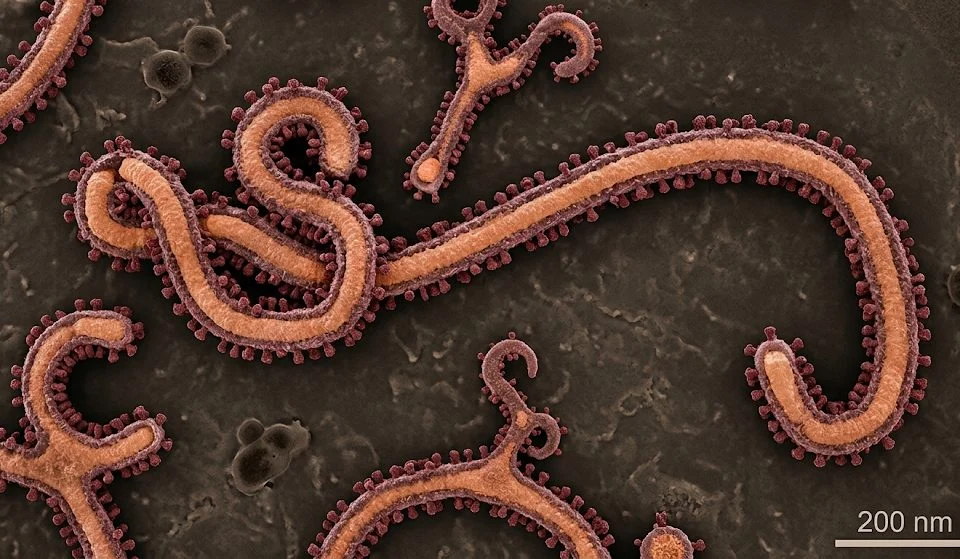
The outbreak is caused by the relatively rare ‘Bundibugyo’ strain of the Ebola virus. It has already spread beyond Congo’s borders to Kenya, Uganda and Nigeria. However, Kenya achieved a major success in controlling the disease last Wednesday when the country’s last Ebola patient recovered and left hospital.
There is still no approved vaccine or treatment against this strain of the virus; however, trials are under way.
By the numbers
According to the World Health Organization’s (WHO) Disease Outbreak News of 1 August 2026, as of 30 July 2026 Congo had 3,605 confirmed cases, of whom 1,587 had died.
At a glance
According to the WHO’s Disease Outbreak News of October 2026, since the outbreak was declared on 15 May 2026, cases have been detected in Congo, Uganda, France, Kenya and Nigeria.
The same report said that as of 20 October 2026, Ituri province, the epicentre of the outbreak, had 7,040 confirmed cases and 3,271 deaths.
Sources
Original report: Ajker Patrika — https://www.ajkerpatrika.com/international/africa/ajph8u513oww7
Background sources: World Health Organization, 1 August 2026 — https://www.who.int/emergencies/disease-outbreak-news/item/2026-don614; World Health Organization, October 2026 — https://who.int/emergencies/disease-outbreak-news/item/2026-DON622