



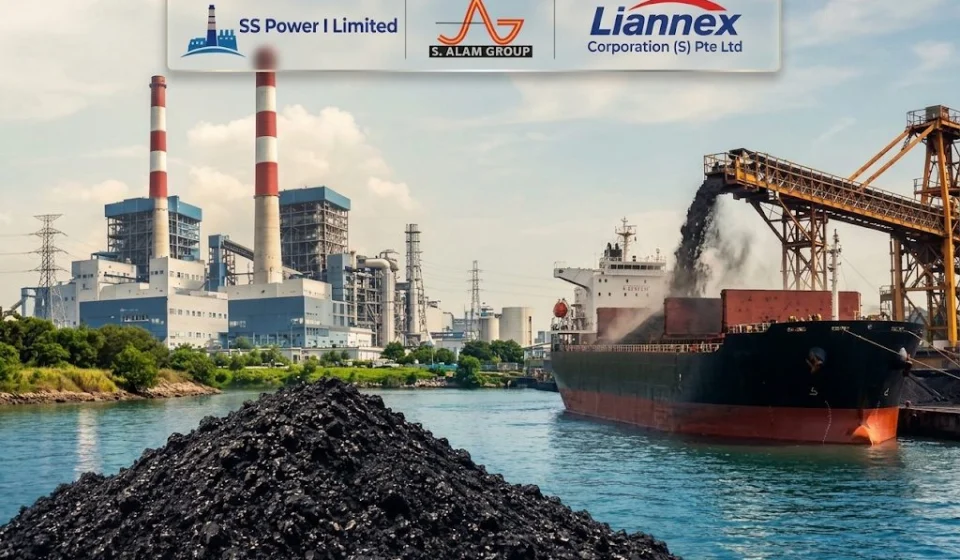
Two local bidders out over ‘minor’ paperwork errors, S Alam-linked Liannex in race for Rampal’s 8 million tonnes of coal

Photo: Collected
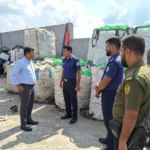
Two experienced local firms have recently been knocked out of the tender for supplying coal to the Rampal power plant over trivial, so-called ‘minor’ errors in paperwork, citing the public procurement rules. This has put Singapore-based Liannex Corporation (S) Private Limited in a quite advantageous position as one of three foreign bidders. This firm, the sole coal supplier to the financially troubled S Alam Group’s Banshkhali power plant, is now still in the race for the big contract to supply 8 million (80 lakh) tonnes of coal to Rampal.
Customs and duty department documents show that since January 2025 the Singapore firm has supplied about 5.2 million (52 lakh) tonnes of Indonesian coal to S Alam’s SS Power-1 Limited. Every one of the 216 bills of entry verified up to 24 September 2026 names the 1320 MW SS Power at Gandamara in Banshkhali, Chattogram district, as the importer. Customs documents show no record of Liannex selling coal to any other buyer in Bangladesh apart from this one customer.
If it gets the supply contract for Rampal, one of the country’s largest power plants, a big opportunity will open up for Liannex to expand its business in Bangladesh, and its sole dependence on SS Power will also fall. SS Power has recently faced a severe financial crisis, failure to pay bills, loan default and a ban on import financing. Beyond business, the big Rampal contract will open the way for additional financing, better shipping arrangements and huge volumes of coal supply for Liannex, which will indirectly help keep S Alam’s Banshkhali plant running too. The S Alam Group is now getting benefits worth hundreds of crores of taka from the country’s power sector. Data show that in the just-ended fiscal year, SS Power, 70 per cent owned by S Alam, took Tk 3287 crore in capacity charges alone. Under the contract, this money will keep coming as long as the plant stays running and can supply electricity to the Power Development Board.
A review of the National Board of Revenue’s Chattogram customs clearance documents shows that Liannex formally began supplying Indonesian steam coal to SS Power on 20 January 2025. From the start of 2025 to September 2026, it cleared coal worth about $500 million (50 crore dollars). Customs records for 2024 showed no earlier coal shipment by Liannex to any other power plant in the country. In other words, when Rampal’s new tender was called in May 2026, Liannex had only 16 months of experience selling coal in Bangladesh, and its only buyer was the S Alam Group’s controversial SS Power, which is under investigation for financial irregularities and embezzlement. The Bangladesh Financial Intelligence Unit has already conducted a major investigation into the S Alam Group’s financial transactions; legal action has also been taken against the owners at various agencies at home and abroad.
The pace of coal prices and shipments was also quite unusual. With bills outstanding from the Power Development Board, SS Power fell into an acute crisis in power generation and coal unloading in March and April 2026; it told the government it could not unload coal from ships. Customs documents show Liannex’s coal clearance slowed in March and stopped completely in April. As soon as supply resumed in May, the declared price of coal suddenly jumped. Through 2025 and the first quarter of 2026, Liannex’s coal price was between 78 and 93 dollars per tonne. After supply resumed in May, the average price rose to 109 dollars, and in September the price per tonne stood at 118 to 121 dollars. That means the price rose by about 30 per cent in just six months. It is true that energy prices in the international market were somewhat high at the time due to geopolitical tension around the Strait of Hormuz. But notably, the price Liannex invoiced in May 2025 was lower than even the regional Platts benchmark. Under the power purchase agreement, the full burden of this higher price later fell on BPC; in other words, this high price is ultimately being paid with the public’s tax money.
State-owned banks were also seen giving unprecedented concessions to save S Alam’s plant. Despite the loan default, Bangladesh Bank issued a special circular on 16 August 2026 allowing state-owned Rupali Bank to finance SS Power’s coal imports against a 100 per cent cash margin until December 2027. After this concession, Liannex’s shipments rose rapidly in August and September. With financing of SS Power’s coal imports made easier through a state-owned bank, Liannex’s business also continued smoothly.
Yet this Singapore trading firm started in an entirely different sector. Liannex Corporation, founded in Singapore in 1993, began with a motor vehicle manufacturing business and later moved into cement and coal trading. The firm claims on its own website that it trades about 2 million tonnes of coal a year, most of it from Sumatra in Indonesia. It uses the globalCOAL framework for global coal trading and runs banking facilities with DBS Bank. Liannex has a direct link with Lim Han Weng, founder and executive chairman of Malaysia-listed energy company Insun Holdings. Insun’s corporate documents show Liannex as a private company of the Lim family, whose several tugs and barges carry coal and gypsum in Indonesia, Malaysia and Vietnam.
In contrast, Rampal’s current and experienced supplier has been mysteriously excluded. In 2023, a joint consortium of Bashundhara Multi Trading, Singapore’s Equentia Natural Resources and the UAE’s Atro International won Rampal’s first long-term coal supply order as the lowest bidder. By January 2026, this consortium efficiently supplied 5.65 million tonnes of coal to Bangladesh-India Friendship Power Company Limited (BIFPCL). Despite the dollar crisis, delays in opening LCs and severe pressure of dues, it kept bringing coal continuously to the 1320 MW Rampal plant to keep the country’s power generation running. It even ensured a record supply of 5 lakh tonnes of coal in one month in November 2015, and arranged interest-free financing for BIFPCL to open LCs. According to power data, Rampal’s two units met more than 9 per cent of the country’s total electricity demand last April.
Despite such a good record, the consortium has been cut from the new tender. The other Bangladeshi bidder, Akij Shipping, has also been excluded. Sources concerned said they were declared ineligible on very minor pretexts such as small spelling errors in the power of attorney document, the place of signature or inconsistencies in dates. BIFPCL has also taken a legal opinion in its favour, though it formally stayed silent when the media contacted it on the matter.
According to experts, under the Public Procurement Act 2006 and Section 48(1) of the Procurement Rules 2008, tenders must be evaluated strictly following the conditions written in the tender document. Besides, Rule 98 draws a clear distinction between minor correctable errors and fundamental errors. Minor spelling errors in no way weaken a supplier’s production capacity or financial base. On top of that, opening the financial proposals before the technical evaluation was completed and later deciding to inspect coal mines have put the entire legal process under serious question.
A very similar procurement controversy was seen earlier at the Matarbari power plant. In 2024, Coal Power Generation Company tactically changed the technical criteria just three days before bid submission, so that firms with experience in transporting cement, fertiliser or food grains also became eligible to supply coal. That time too, the Bashundhara consortium was disqualified on the pretext of the wording of the bid security, and the consortium of Unique Cement and Aditya Birla benefited. Although the High Court later declared that amendment to the procurement rules unfair and illegal, it did not order a new tender at the time because the plant needed to keep running. Later, the Matarbari plant fell into various crises, including objecting to unloading coal mixed with soil.
If Liannex somehow gets the Rampal work, it will become a huge commercial and financial risk for the public power sector. BPDB owns 50 per cent of the Rampal power plant, while most of SS Power is owned by the controversial S Alam Group. The fuel costs and losses of both plants are ultimately borne by the Bangladesh Power Development Board, and thus by ordinary people. With the large financial capacity and logistics strength Liannex would gain from Rampal’s huge supply contract, it would also keep S Alam’s nearly closed Banshkhali plant alive. Altogether, deep uncertainty and fear have arisen over the transparency of public procurement, open competition and the country’s overall energy security.
Source: Daily Wada
Background
Desh Rupantor raised questions about Rampal’s coal supply tender in a report of 23 September 2026. The report also said that, according to power plant sources, BIFPCL had not directly contacted several Indonesian mines capable of supplying coal of the quality sought in the tender.
By the numbers
According to information provided by the Maitree Super Thermal Power Plant, the Rampal plant supplied 640 million units of electricity to the national grid in December 2025, which was 11.5 per cent of the country’s total generation that month — BSS reported this on 8 January 2026.
According to a Dhaka Times report of 3 October 2026, a record 1,321 megawatts was being generated that afternoon from Rampal’s two units combined: 656 megawatts from the first unit and 665 megawatts from the second.
At a glance
The same Dhaka Times report said the initiative to build the Rampal plant as a joint venture of Bangladesh and India was taken in 2010. BIFPCL was formed under an agreement signed on 29 January 2012 between the Bangladesh Power Development Board (BPDB) and India’s National Thermal Power Corporation (NTPC).
Sources
Background sources: Desh Rupantor, 23 September 2026; BSS, 8 January 2026; Dhaka Times, 3 October 2026