Saudi-led coalition claims it intercepted three ballistic missiles, Houthis say 85 soldiers including 47 Pakistanis captured

Photo: Collected
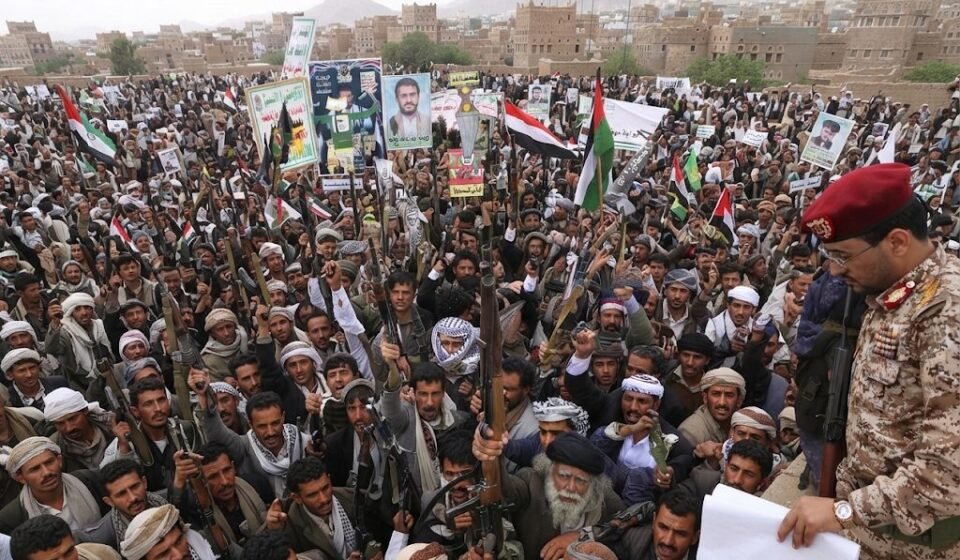
The Houthis have claimed that they captured 85 soldiers of the Saudi-led coalition after clashes around the Bab al-Mandab Strait. According to the group’s military spokesman Yahya Saree, 47 of the captured soldiers are Pakistani. Meanwhile, the Saudi-led coalition has claimed it intercepted three ballistic missiles fired at Khamis Mushait.
Coalition spokesman Turki al-Maliki said in a statement on the social media platform X that one ballistic missile was fired towards Riyadh and two towards Khamis Mushait. He claimed all three were intercepted and destroyed in the air.
Residents of Riyadh heard several loud explosions on Monday night. Shortly before that, warning messages had been sent to their mobile phones about the threat of an air attack. The Houthis claimed their target in Riyadh was King Khalid International Airport. Yahya Saree also said drones had been sent targeting a military airbase in Khamis Mushait. The city of Khamis Mushait is located near the Yemen border.
The Houthi military spokesman again warned international airlines and passengers about operating flights and travelling through Saudi Arabia’s airports, although the airports of Makkah and Madinah were not included in the warning. Saree claimed the other airports in Saudi Arabia are now ‘unsafe’.
The new missile attack came at a time when Riyadh’s King Khalid International Airport has been closed since Saturday’s Houthi attack. At least 13 people were killed and more than 300 injured in that day’s attack. In another attack the next day, Sunday, one person was killed and 11 were injured.
According to the Saudi authorities’ announcement, the airport will remain closed until next Saturday. In this situation, various airlines have cancelled flights to and from Riyadh. The Houthis have also attacked oil facilities in Saudi Arabia.
The Houthis have long been fighting forces linked to Yemen’s internationally recognised government for control of the country. The Saudi-led coalition is carrying out air strikes on Houthi positions on the one hand, while supporting the Yemeni government’s ground forces on the other. This conflict in Yemen has also intensified amid rising tension in the Middle East over the war by the United States and Israel against Iran.
Concern over capacity to handle the crisis
Speaking at an energy conference in Riyadh, Saudi Energy Minister Prince Abdulaziz bin Salman Al Saud said the attacks on airports over the past week have put the country’s capacity to handle crises to the test. He said, ‘The events of recent weeks are serious. Our response must be equally serious.’
The energy minister also stressed continuing to implement ‘Vision 2030’ announced by Saudi Crown Prince Mohammed bin Salman. The plan aims to diversify the country’s economy and reduce its dependence on oil. He said, ‘Investment must continue.’
Meanwhile, the country’s authorities have launched an investigation to find out why the Saudi air defence system failed to stop one missile and drone attack after another. Two Middle Eastern officials told the Associated Press (AP) news agency this on condition of anonymity.
According to them, the preliminary investigation suggests that the Houthis first tried to keep Saudi air defences busy by sending several drones, thus paving the way for the subsequent attack. A barrage of cruise and ballistic missiles was then fired, some of which ultimately reached the airport.
The Houthis have some ballistic missiles whose explosive-carrying section can change course in flight. Stopping such missiles has become a tough challenge for Saudi Arabia. The country relies on various defence systems, including the Patriot, to intercept missiles.
One official told AP that the investigation is also looking into why no advance warning of the attack could be given. According to him, the missiles and drones travelled more than 1,000 kilometres, or about 620 miles, to reach Riyadh. Investigators are looking at why the Saudi defence system could not give an early warning even after such a long journey.
Houthi warning to the United States
Although US President Donald Trump criticised the Houthis’ actions, he did not make clear whether Washington would take any action against the group. When journalists asked what the United States would do about the Houthis, he said, ‘The Houthis are behaving very badly. It is not good at all.’
Meanwhile, Mohammed al-Bukhaiti, a member of the Houthis’ political wing, warned of retaliation if the United States intervened militarily in Yemen. He told the AFP news agency, ‘If the United States takes part in aggression against Yemen, we will not delay in deciding to respond. Rather, swift and painful blows will be struck against the United States and all targets linked to its interests in this region.’
Al-Bukhaiti also warned those who work at Saudi Arabia’s oil facilities and airports. He said, ‘I warn all officials and employees of Saudi Arabia’s oil facilities and airports to stay away from these facilities. Because they have now become legitimate targets.’
Impact on investment conference and flight schedules
Because of the deteriorating security situation, uncertainty has also arisen over several important events due to be held in Riyadh this month, including Saudi Arabia’s major investment conference and the World Energy Congress. The names of several top oil executives have also been dropped from the programmes of these events.
On Monday, Etihad Airways, the national airline of the United Arab Emirates, said all flights to and from Riyadh had been cancelled until next week; it has also suspended flights to Dammam and Jeddah.
Bahrain’s national airline Gulf Air said all Riyadh flights would remain cancelled until next Saturday. And US airline Delta has postponed the launch of its direct flight from Atlanta to Riyadh, which was due to start on 23 October.
Source: Radar Africa and Al Jazeera.