
Photo: Collected
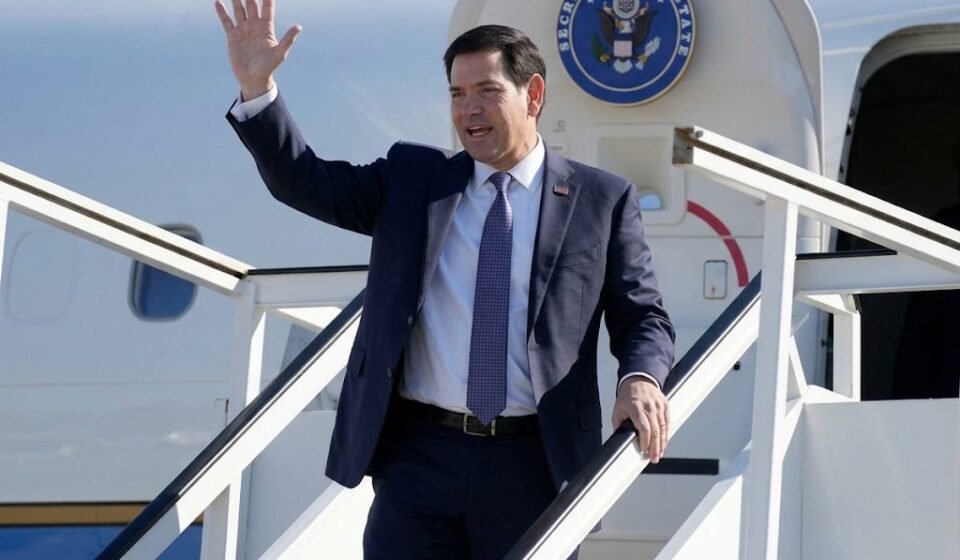
US Secretary of State Marco Rubio is travelling to Uzbekistan this week with a large business delegation, where he will also join a ministerial meeting with the five Central Asian countries. He will head to India after the trip.
The US State Department said this on Tuesday.
In the first leg of the tour, he will be in Samarkand, Uzbekistan, from 17 to 22 October. There, besides taking part in the ‘C5+1’ ministerial meeting, he will hold bilateral meetings with Kazakhstan, the Kyrgyz Republic, Tajikistan, Turkmenistan and Uzbekistan.
News agency AFP reported this from Washington.
The US State Department statement said, ‘On this historic visit, Secretary of State Rubio will lead a US commercial delegation made up of more than 200 business leaders. This will mark the beginning of a new era in strengthening commercial cooperation between the United States and Central Asia.’
It may be noted that US President Donald Trump welcomed the leaders of the five resource-rich Central Asian countries to the White House in November last year.
After Uzbekistan, Rubio will travel to India – this will be his second official visit to the country this year. He will stay in the cities of Mumbai and Jamnagar from 17 to 22 October and will hold meetings with senior government officials of the country. Strengthening the US-India strategic partnership, exchanging views on the regional and global situation, and discussing the prospects of greater cooperation in the energy sector are all aims of the visit.
The statement mentioned that Rubio will also meet business leaders to expand opportunities for commercial investment and economic cooperation.
On his most recent visit to India, in May, Rubio toured four cities of the country in four days. Successive US administrations had been viewing India as a like-minded partner in a world order shaped by the rise of China.
Trump, however, has changed that policy – he has temporarily imposed high tariffs and has drawn closer to India’s historical rivals Pakistan and China.