


Photo: Collected
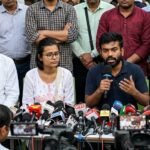
Tirana, the capital of Albania, has been rocked by protests by thousands of students and ordinary people, with clashes with police and a fire at a government building. The movement began over corruption, the poor quality and rising cost of education, and demands to scrap a controversial project linked to a company owned by Jared Kushner, son-in-law of US President Donald Trump. Despite the intensity of the protests, Prime Minister Edi Rama has refused to resign.
On Thursday (15 October) protesters smashed the windows of a government building on the streets of Tirana and clashed with police. Police fired water cannon and tear gas to bring the situation under control. The sitting of the country’s parliament was cancelled again because of the protests.
According to a Reuters report, students taking part in the movement of the past few days have raised the high cost of living, unemployment, the lack of jobs and high-level government corruption as the main issues. The protesters allege that work on Jared Kushner’s resort project began earlier this year by destroying the coastal environment in the south of the country, and that they have been opposing it peacefully ever since, but the government has paid no heed.
Local villagers had earlier alleged that their land was sold by force without any legal process. Kushner’s side has denied these irregularities.
Rejecting the demand for his resignation outright in a written statement to Reuters, Prime Minister Edi Rama said, ‘My duty is to listen to the people, to solve any problem of theirs and to take Albania forward. To do otherwise would be to betray the Albanians, who gave me a strong mandate to conclude the negotiations for European Union membership successfully.’
Denying the corruption allegations against his government, Rama said, ‘My door is open for discussion about rising education costs or other problems. But attacking government institutions, destroying public property and endangering public safety have nothing to do with the students’ legitimate demands.’ He also alleged that certain hostile forces at home and abroad were inciting the violence in order to derail Albania’s progress towards EU membership.
Violence and international reaction
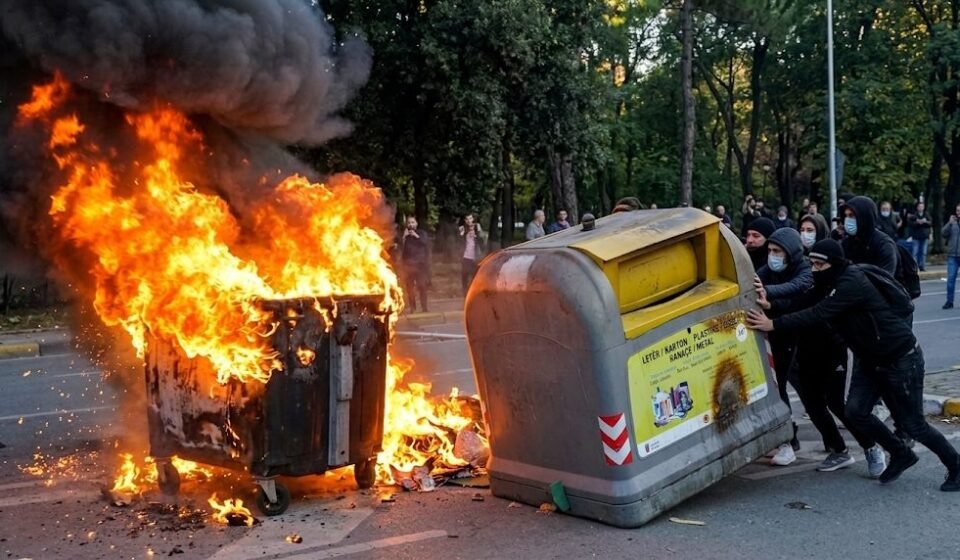
The protests have entered a third day. Burnt rubbish bins, smashed bus stops and traffic signals lie on the streets of Tirana. Police again charged at protesters and beat them with batons in Skanderbeg Square on Thursday, in front of tourists. In a statement, the European Union mission in Albania called on all sides to show restraint, saying constructive dialogue is the only way out of the crisis.
The student movement has become one of the biggest political challenges for Prime Minister Edi Rama, who came to power for a fourth time last year. The political unrest has created fresh concern in Albania, which is pressing ahead with the goal of joining the European Union by 2028.