




Food adulteration fines of nearly Tk 3.55 crore in July-October, food minister wants tougher law

Photo: Collected
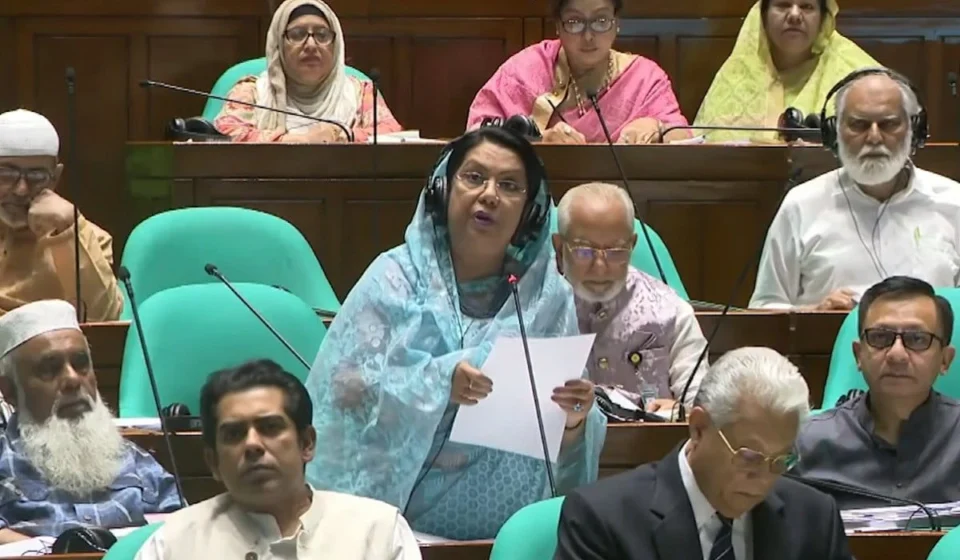
Food Minister Afroza Khanam has said work is under way to detect adulteration by testing food samples at various government laboratories. Based on these tests, fines of about Tk 3,55,23,600 were imposed for various irregularities from July to October. She also believes steps should be taken to enact a tougher law, in addition to the existing law, to prevent food adulteration.
The food minister said this in Parliament on Sunday while replying to a supplementary question from opposition MP Md Abdul Bari Sardar of Rajshahi-4. She said legal action is being taken against various individuals and institutions under the Bangladesh Safe Food Act, 2013. Various activities, including raising children’s awareness of food safety and holding meetings and rallies with women, are also under way.
Giving an account of the government’s measures, the minister said 717 samples were tested at government-recognised laboratories, 4,787 at mobile labs and 779 at district-level minilabs.
However, the food minister believes it is difficult to stop food adulteration completely through law enforcement and fines alone. For this, ethics and a sense of conscience need to be awakened among people, she remarked. She drew the law minister’s attention to considering the enactment of a tougher law.
In response, the law minister said that if any proposal for a law on the matter comes from the food ministry, it will be scrutinised and steps will be taken to make it timely and people-oriented.
Treasury bench MP Mohammad Akhtaruzzaman of Mymensingh-10 also asked a supplementary question that day. The food minister told him that work is under way to increase laboratory capacity to detect various chemical substances and contaminants in food products.
The minister said steps have been taken to set up a central reference laboratory in the capital Dhaka and two divisional laboratories in Khulna and Chattogram with financial and technical assistance from the Japan International Cooperation Agency (JICA). If the equipment and technical capacity of these laboratories increase, verification of the quality and safety of food products will be more effective.
At a glance
According to a bdnews24.com report of 15 June 2015, the Safe Food Bill, providing for a maximum of five years’ imprisonment and a Tk 20 lakh fine for adulterating food and mixing harmful chemicals, was passed in Parliament on 7 October 2013; the government brought the law into force from 1 February 2015.
According to the law database of the United Nations Environment Programme (UNEP), the same law provides for the formation of the Bangladesh Food Safety Authority; the law has 90 sections in 13 chapters.
Sources
Background sources: bdnews24.com, 15 June 2015; UNEP LEAP (law database), accessed 15 November 2026