





Committee of VCs proposed to cut four-month admission backlog, agri cluster reform from 2027-28

Photo: Collected
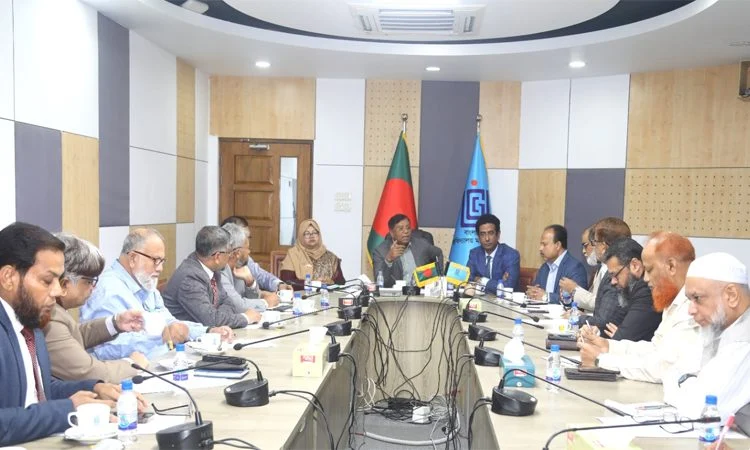
The University Grants Commission of Bangladesh (UGC) has proposed forming a committee of vice-chancellors of agricultural universities to raise the standard of the agriculture cluster admission test and reduce delays in the admission process. The move to reform the admission test system aims to fill all first-year seats and complete academic sessions on time.
UGC Chairman Professor Dr Mamun Ahmed raised the proposal at a view-exchange meeting with vice-chancellors of the country’s agricultural universities at the UGC today (Sunday). Vice-chancellors of 10 agricultural and agriculture-focused universities of the country attended the meeting.
The meeting was told that, from the 2027-28 academic session, the committee will make the necessary recommendations to improve the standard of questions in the admission test, assess students’ real merit, fill all seats and start and finish academic activities on time. The UGC chairman sought specific recommendations from the vice-chancellors for this.
The vice-chancellors said about one lakh students sit for the agriculture cluster admission test every year. But it takes about four months to complete admissions from the waiting list and subject changes or migration. This makes filling seats difficult, especially at the new agricultural universities, and seriously delays the start of academic activities.
Expressing concern over the delays in the admission process, Professor Dr Mamun Ahmed said no seat can be left vacant because of the admission process; academic activities must start and finish on time. In his view, the standard of questions must be such that students’ knowledge of the relevant subject, real merit and analytical skills can be properly assessed. To that end, he stressed taking effective steps to improve the admission test system from the 2027-28 academic session.
The meeting also discussed in detail including creative questions alongside multiple-choice questions in the admission test, assessing students’ analytical skills and determining the weight of SSC and HSC GPAs.
On modernising and harmonising curricula, the vice-chancellors proposed common guidelines for developing and updating curricula of agriculture-related subjects and bringing consistency among agricultural degrees. Suggestions also came to add courses on career development, research methodology and mathematics to the curriculum to better prepare students for their careers.
Expressing concern about the link between higher education and employment, the UGC chairman cited information from the World Bank’s recently published report ‘Demographic Change in South Asia: From Tailwinds to Headwinds for Development’.
He said more than 60 per cent of young graduates in Bangladesh are forced to work in the informal sector as they cannot find jobs matching their qualifications, which is creating frustration and anger among them. To tackle this situation, the quality of higher education must be improved, job-oriented skills increased, and research and links between universities and industry strengthened.
The meeting also called for resolving the teacher shortage at universities, modernising curricula and finding effective solutions to problems through research. A plan to make internships mandatory and paid for all students within the next five years was also presented.
UGC members Professor Dr Masuma Habib, Professor Md Abdullah Al-Mamun and Professor Dr Md Aslam Hossain, UGC Secretary Dr Md Fakhrul Islam, and Director of the Public University Management Division Mohammad Jaminur Rahman, among other officials concerned, were present at the meeting.
By the numbers
According to a Khobor Sangjog report of 24 November 2025, the nine universities under the agriculture cluster had a total of 3,701 seats in the 2025-26 academic session.
According to a Jugantor report of 16 April 2025, 94,020 students applied for 3,863 agriculture cluster seats in the 2024-25 academic session.
Sources
Original report: BSS
Background sources: Khobor Sangjog, 24 November 2025; Jugantor, 16 April 2025