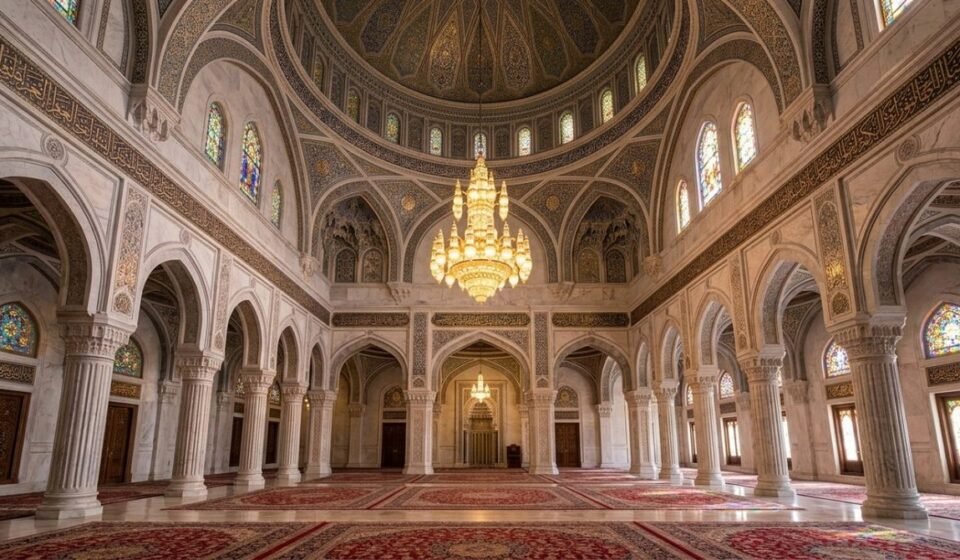

Photo: Collected
Time is one of the greatest blessings of Allah the Exalted. He who does not understand the value of time is, in the true sense, the loser. The barakah of time is lifted from the very life of the person who wastes time.
The Messenger of Allah (SAW) said, ‘There are two blessings in respect of which most people are deceived (suffer loss): good health and free time.’ (Sahih Bukhari, hadith 6412)
So time and opportunity must be put to use before they are lost. It is narrated from Ibn Abbas (RA) that the Messenger of Allah (SAW) said, ‘Value five things before five: youth before old age, good health before illness, wealth before poverty, free time before being busy and life before death.’ (Mustadrak Hakim, hadith 7846)
The word ‘barakah’ means good and abundance. For there to be barakah in something means that good, abundance and permanence come into it. For example, barakah in money means that the money is spent in the way of good and welfare, and that the good in the work on which it was spent increases and becomes lasting. The barakah of time is therefore very important for making proper use of life.
Time will run out quickly in the last age
The Messenger of Allah (SAW) said that before the Day of Judgement time will seem to pass quickly. Knowledge will decrease, earthquakes will increase, fitna will spread and killings will rise. (Sahih Bukhari, hadith 1036)
Another hadith states, ‘A time will come when a year will seem like a month, a month like a week, a week like a day, a day like an hour and an hour like the moment of kindling a fire.’ (Tirmidhi, hadith 2332)
Explaining this, scholars have said it may mean a decrease in the barakah of time, or time actually passing quickly. Even today there are 60 minutes in an hour, 24 hours in a day and 12 months in a year; yet many say, ‘I just do not get time.’ A major reason for this is the decrease in the barakah of time. Scholars have given several such meanings of time being shortened.
Ways to gain barakah in time
1. Realising the value of time: Time is man’s real capital. It is with this time that man achieves success in this world and the hereafter. Allah the Exalted says, ‘On that day every person will find the good and evil deeds he has done present before him.’ (Surah Al-e-Imran, verse 30)
2. Starting work at dawn: The Messenger of Allah (SAW) prayed, ‘O Allah! Grant barakah to my ummah in their morning work.’ (Tirmidhi, hadith 1212) Barakah comes when worship, study and work are begun at dawn.
3. Remembering accountability for time: The Messenger of Allah (SAW) said, ‘On the Day of Judgement the two feet of the servant will not move until he is asked about four things: where he spent his life, what use he made of his knowledge, from where he earned his wealth and where he spent it, and what he used his body for.’ (Tirmidhi, hadith 2417)
4. Building a relationship with the Quran: Allah the Exalted says, ‘This is a blessed Book which I have revealed to you.’ (Surah Sad, verse 29) Recitation of the Quran brings barakah to a person’s time, life and work. It was the experience of many scholars that the more they read the Quran, the easier and more fruitful their work became.
5. Staying away from things that waste time: Ibnul Qayyim (RH) said, ‘Wasting time is more terrible than death; because death separates you from the world, while wasting time separates you from Allah and the hereafter.’ Watching television unnecessarily, spending excessive time on mobile phones and social media, playing aimless games, unnecessary chatting, excessive sleep or staying up at night, laziness and the habit of putting work off are some of the causes of wasting time.
6. Making use of even a little time: The Salaf-e-Saleheen did not waste a single moment. Whenever they got free time, they remained absorbed in reciting the Quran, zikr or the pursuit of knowledge.
7. Arranging the day’s routine around prayer times: The five daily prayers teach people the importance of time and bind a disorderly life in a definite and sacred discipline. In the Holy Quran Allah has said, ‘Surely prayer has been made obligatory upon the believers at fixed times.’ (Surah Nisa, verse 103)
8. Setting life’s priorities: In Shariah there is a term called ‘Fiqhul Awlawiyyat’ or the science of priorities. The science of priorities is to understand correctly, from the viewpoint of Islam, which work is to be done first and which later. Imam Shafi’i said an intelligent person should make a list according to the importance of tasks: first the urgent obligatory duties, then the important priorities. (Kitabul Umm: 1/89) The barakah of time can be gained in this way too.
9. Easy deeds with greater reward in little time: Saying ‘Subhanallah’, ‘Alhamdulillah’ or ‘Allahu Akbar’ once is equal to one act of charity. ‘Alhamdulillah’ will make the scale of deeds heavy on the Day of Judgement. If one says ‘Subhanallahi wa bihamdihi’, a date palm is planted in Paradise. (Tirmidhi)
At least 10 rewards are earned for reading each letter of the Quran. Reading Surah Ikhlas three times is equal to the reward of completing the whole Quran, and there are glad tidings of a palace being built in Paradise for reading it 10 times. ‘La hawla wala quwwata illa billah’ is one of the priceless treasures of Paradise. (Sahih Bukhari and Muslim)
Finally, it should be remembered that time, once gone, does not return. So one should try to spend every moment in deeds that please Allah.