






Iran lifts 2,000km cap on missile range, says US-used bases in Europe will be targets if attacked again

Photo: Collected
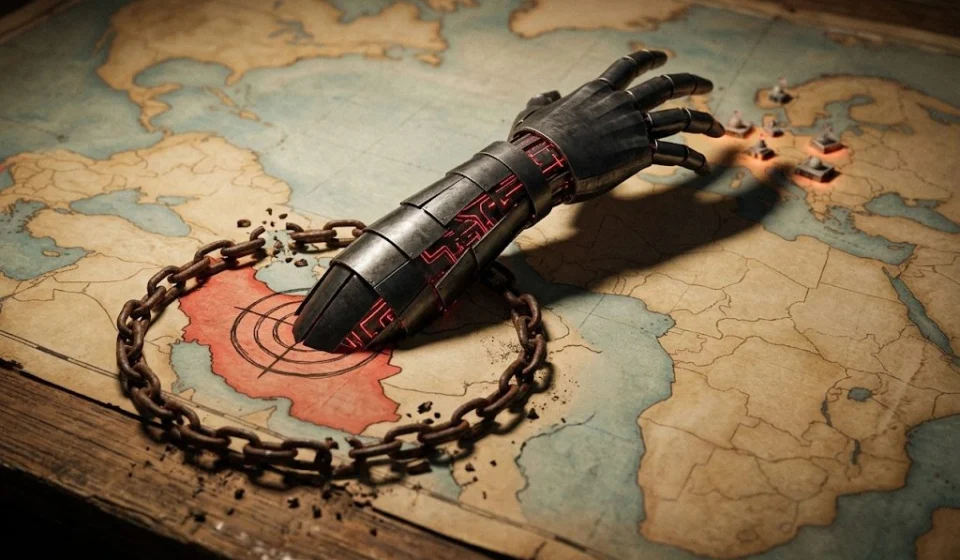
Iran will no longer abide by its previously announced range limit of 2,000 kilometres (1,200 miles). The Islamic Revolutionary Guard Corps (IRGC) has announced the lifting of restrictions on extending the range of its ballistic missiles. Top officials in Tehran have also recently warned that if the United States and Israel launch fresh attacks, the military facilities used by US forces in Europe will be direct targets.
IRGC spokesman Brigadier General Hossein Mohebbi confirmed the lifting of the restrictions. Without giving details, he said only that the Iranian military is now focusing on a practical demonstration of this capability on the battlefield.
Iran has not yet publicly unveiled any formal technology for building missiles capable of striking targets more than 2,000 kilometres away. However, US officials believe the country already has the technology needed to build intercontinental ballistic missiles (ICBMs). Even within the current 2,000km limit, most of the Middle East as well as large parts of European countries such as Greece, Bulgaria and Romania are within Iran’s reach.
Mohebbi warned that if a military conflict with the United States and Israel breaks out again, the world will see various surprises made by Iran on the battlefield. Sending a stern message to adversaries, he said Iran’s next strikes would be even more devastating and severe.
Meanwhile, in an interview with Russian media outlet RT on Monday, Ezzatollah Zarghami, a member of Iran’s Supreme Council of Cyberspace, said that given how the nature and scope of potential threats facing the Islamic Republic are changing, it is only natural to reorganise its lines of defence and military capabilities. He also made clear that Iran will no longer accept any geographical limitation on its defence capabilities.
Last week, in an interview with EuroTimes, Ahmad Bakhshayesh Ardestani, a member of the Iranian parliament’s national security committee, issued an even more direct warning. According to him, if America uses bases on any European territory, such as Italy or Germany, against Iran, Iran’s missiles will be fired directly at Europe.
Amid this tension, an IRGC statement quoted a pledge by Iran’s Supreme Leader Ayatollah Mojtaba Khamenei: threats of all kinds and at all levels will be answered effectively and firmly, without any geographical boundary. He has even asked military chiefs to update Iran’s list of targets so that it includes all tangible and intangible assets of the enemy within reach.
Asked about the US response, President Donald Trump said in an interview with CNN on Sunday that the chances of attacking Iran again are very slim if Tehran reaches a very strong deal with Washington. However, Trump indicated that he is ready to order US forces in the region back into action depending on the situation, and that a list of potential targets has already been drawn up.
Background
According to an Iran International report of 7 November, Mohebbi made the announcement at a press conference in Tehran on Saturday marking the IRGC’s Aerospace Week. There he said the late Supreme Leader Ali Khamenei had at times asked for the extension of missile range to be halted, and at other times had permitted it to be extended.
On the same day, Ali Belali, an adviser to the commander of the IRGC Aerospace Force, said Iran’s missiles have a range of about 2,000 kilometres and are capable of precision strikes, Iran International reported.
At a glance
According to the Associated Press, Iran is not known to possess missiles with a range of more than 2,000 kilometres; that range covers parts of Greece and the Balkans, the entire Arabian Peninsula, the Levant and most of Egypt — Australia’s The Senior published this AP report on 7 November.
Sources
Background sources: Iran International, 7 November 2026; The Senior (AP), 7 November 2026