
Photo: Collected
After ousting former president Aleksandar Vucic’s party from power in Serbia, the newly elected student-led political alliance has called for the resignation of top officials at various levels of the administration, including the police, intelligence agencies and the judiciary. The new leadership has also pledged to investigate corruption, reform state institutions and guarantee media freedom.
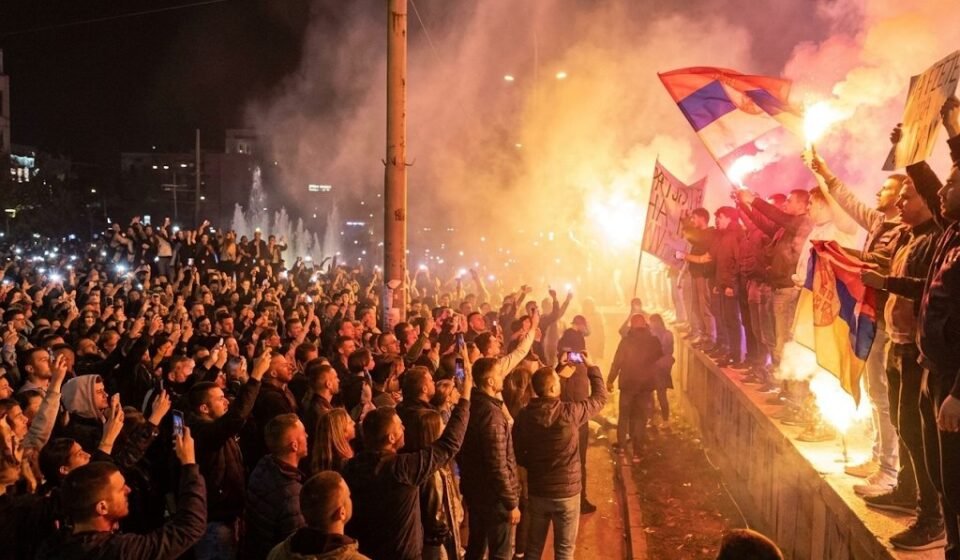
According to the BBC, the newly elected MPs raised the demand at a rally in Pioneers Park, opposite the parliament building in Belgrade, yesterday, Thursday, local time. They called for police officers accused of breaking the law to be dismissed at once, naming in particular the police chief, the head of the BIA intelligence and security agency and the head of the counter-terrorism unit.
A move is under way to reshape Serbia’s political and administrative structure through the 141 MPs of the ‘Student List’ who won at the polls. The winning list includes intellectuals, professors, artists, athletes and at least 12 doctors and surgeons. However, the handover of power will take several weeks to complete. The student movement fears that evidence of possible irregularities and corruption could be destroyed in the meantime.
Within hours of Vucic conceding defeat, the tent camp of his supporters was removed from Pioneers Park in Belgrade. Volunteers turned out to clean up the park on Monday morning. The site had earlier been the camp of Vucic’s loyal supporters.
Marija Milovanovic, 25, who joined the clean-up, said, ‘This is just the first step of the spring cleaning. Now the new ones are coming. We are very excited, but we are also ready for the job.’
The student movement began in November 2024, after the collapse of a railway station canopy in Novi Sad, the country’s second-largest city, killed 16 people. They built the movement demanding justice for those responsible for the disaster and an investigation into the widespread corruption alleged to be behind it.
The ‘Student Plan’ announced by the protesters promises to end corruption and the plundering of state assets, return embezzled assets to the state budget and invest directly in education and the economy. Work has already begun to remove Vucic loyalists from the state broadcaster RTS; its director, Manja Grcic, has resigned.
Newly elected MP Mirjana Nikolic said Serbia’s citizens have the right to true and impartial information, yet for years RTS worked in the government’s interest. The new MPs also want to move to remove Vladimir Lucic, head of Telekom Srbija, from his post.
Acting President Ana Brnabic, known as a close ally of Vucic, has, however, criticised the move. She alleged that the opposition wants to introduce ‘revolutionary justice’ instead of the rule of law and is planning to shut down media outlets it dislikes.
MP Dejan Soskic, a familiar face of the new government, has stressed starting reforms quickly. The economist was governor of Serbia’s central bank from 2010 to 2012. He said his goals for the first six months are to guarantee media freedom, act against corruption, run state institutions in line with the law and enact a lustration law.
The law would bar from public office those members of Vucic’s government or party structure who are proven to have violated the rights of Serbia’s citizens.
Strahinja Subotic, a researcher at the Belgrade-based European Policy Centre, believes such changes will take time because of the long control Vucic and his party have had over the administration and politics. In his view, the new administration will have to move forward in coordination with the institutions and parts of them that have worked effectively in the past.
Students at universities across Serbia chose the 141 winning candidates through a long and confidential process. They are now responsible for implementing the political and administrative restructuring plan drawn up by the students.
It took months to build consensus on the programme among students of different views and backgrounds. Now the burden of implementing it rests on the newly elected MPs; the students themselves will not wield power directly.
Radomir Saicic, a professor of biochemistry at the University of Belgrade and a member of the Student List, told the BBC that the method of implementation will be worked out along the way, but the new MPs will follow the detailed 1,200-page plan prepared by the students. In his words, ‘Parliament will make the decisions. But since this change began through the efforts of the students, we will give great weight to their views and work closely with them.’
These MPs, new to politics, also have no clear leader. Besides reforms at home, they face the challenge of handling Serbia’s complex diplomatic position on the international stage.
The new government is expected to focus on domestic reforms at first. But there is not much time before the next election campaign begins; Serbia is due to hold a presidential election in December.
Under the law, Aleksandar Vucic cannot run for a third term as president. But he has declared that his defeated Serbian Progressive Party will return to the political fight. In Vucic’s words, ‘We will defeat them much faster than they can even imagine.’
Background
According to a Meduza report, Vucic stepped down as president in late September ahead of the snap parliamentary election on 25 October; he had planned to become prime minister if he won.
By the numbers
According to an AP report published in The National Herald, Vucic himself said his party, the SNS, won about 1.7 million votes, while the Student List won about 2.2 million.
Sources
Original report: Ajker Patrika
Background sources: Meduza, 26 October 2026; The National Herald (AP), 26 October 2026