
Photo: Collected
Behind China’s long-standing dominance at the Asian Games, not only government investment but also the coordinated efforts of families, schools and sports federations are playing a big role. The success of 12-year-old skateboarder Cao Siqi at this edition is an example of that very system.
Taking part in the Asian Games for the first time, Siqi reached the final of the women’s park event. Although she eventually finished fourth, her performance on the big stage at just 12 years of age has drawn attention. She is the youngest among China’s 815 athletes at this edition.
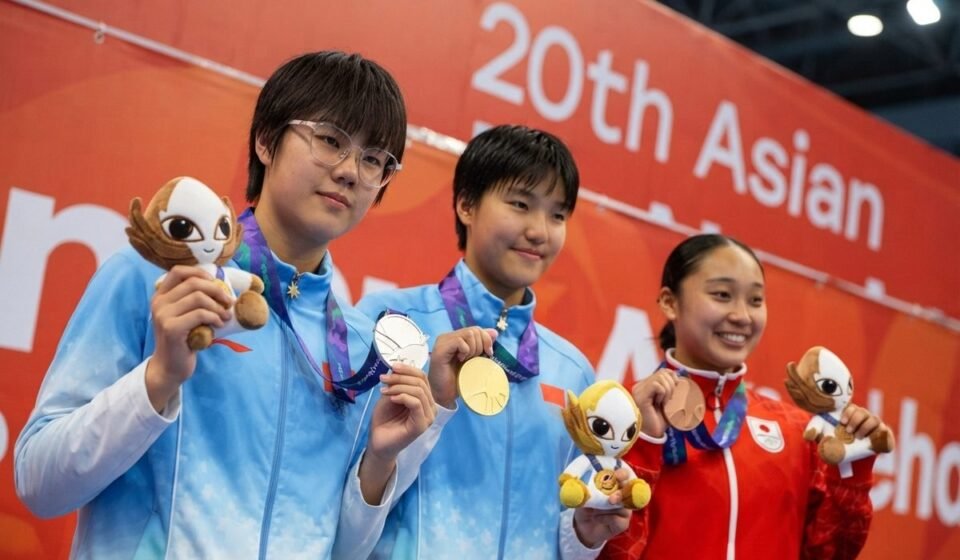
Alongside Siqi, 13-year-old Yu Zidi has won three golds. Fifteen-year-old Zhu Yuanling has won gold in the women’s street event of skateboarding. Several other teenage athletes are also bringing success for China.
After first taking part in 1974, China gradually established dominance at the Asian Games. After topping the medal table for the first time in 1982, they have been the best team at 11 consecutive editions. The country also set a record of winning 415 medals at a single edition at the Guangzhou Asian Games in 2010.
China are far ahead on the medal table this time too. As of 29 September, their total medals stood at 254, comprising 143 gold, 62 silver and 49 bronze.
According to Xinhua journalist Gao Peng, alongside government investment in infrastructure, the role of families, schools and federations is important behind China’s sporting success. Many young people are now training with the support of their families, and the talented ones are later being given professional training, coaching and medical support by the federations.
Siqi, who took up a skateboard at just five years of age, has also risen step by step to the national level through family and the training system and has now earned a place on the stage of the Asian Games. Athletes of the new generation like her are building the foundation of China’s future sporting success.