
Photo: Collected
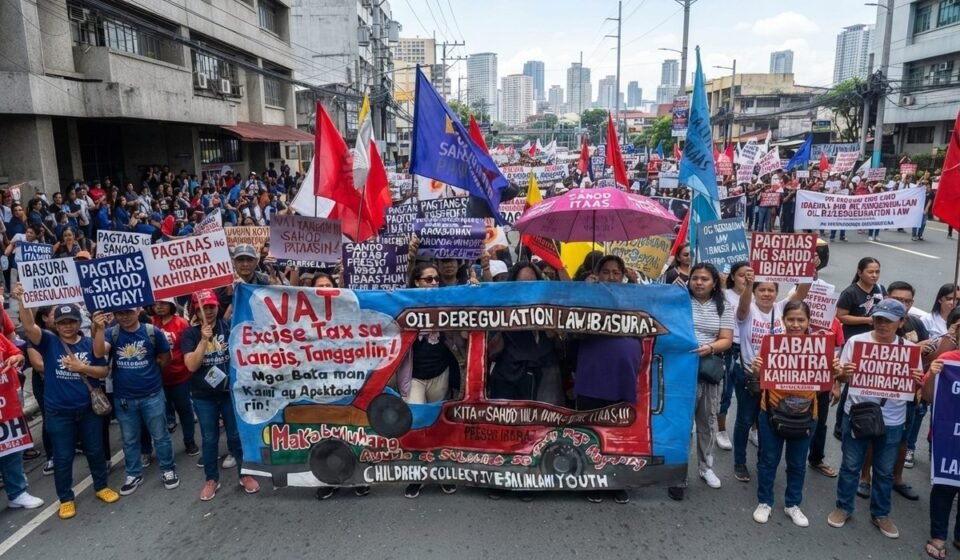
A nationwide transport strike in the Philippines, launched after fuel prices rose by a record amount, has entered its third day. Meanwhile, the price of diesel has touched a high of 147 pesos per litre in different regions of the country. Following several consecutive rounds of price hikes, public transport drivers are demanding the suspension of the excise tax imposed on petrol and diesel to bring prices down to a tolerable level.
However, President Ferdinand Marcos Jr rejected the demand, saying that if the tax is suspended the government will lose around 400 million pesos in revenue every day.
Public transport drivers called the three-day strike from Monday (28 September) in protest against the unbridled rise in fuel prices. During the movement, Elmer Cordero, a 78-year-old jeepney driver, suffered a stroke and collapsed on Tuesday while leading the strike in the busy Monumento area of Caloocan City. Although his colleagues had told him to take some rest, he was always active on the streets in protest against sky-high fuel prices and to demand that President Marcos scrap the taxes on diesel and petrol. He is now undergoing treatment in hospital in a coma. The elderly driver, who has driven jeepneys for decades, has now become a symbol of the Philippine government’s neglect amid the global geopolitical crisis.
Mody Floranda, president of the transport federation Piston, said transport workers have had almost no income since the war began in the Middle East. On the other hand, an organisation named ‘Para Commuters Network’ said another 20 percent of public transport drivers stopped driving this September alone because of uncontrolled fuel price hikes. As a result, ordinary commuters are taking far longer than usual to reach their destinations.
Para Commuters Network spokesperson Rain Desaca directly blamed President Marcos for the situation, saying the president is refusing to use his legal power to suspend taxes on fuel during the state of war in West Asia, despite having it. Marcos himself is responsible for these sufferings of the people, and his failure to resolve the crisis is as problematic as the state of war.