
Photo: Collected
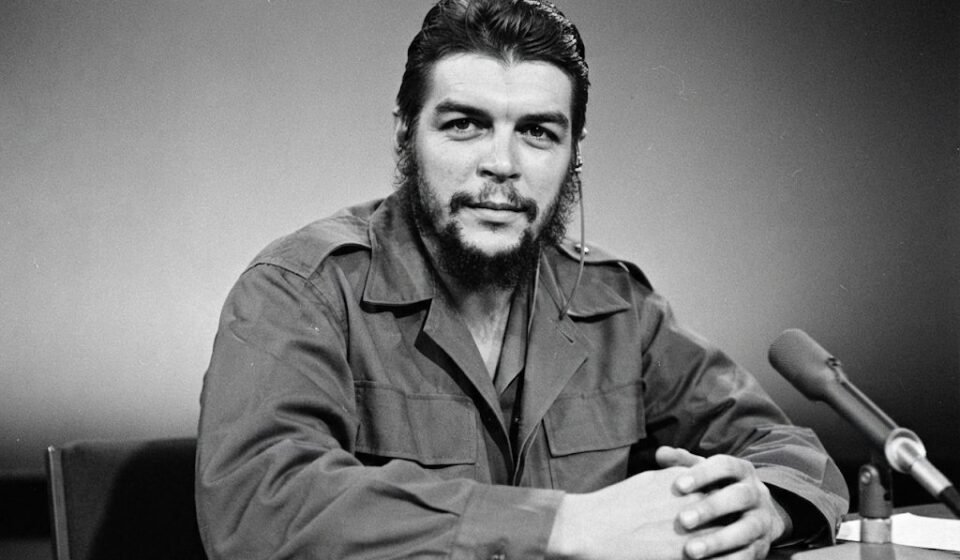
A beret on the head, dishevelled hair and a tireless temperament: young revolutionaries around the world still draw inspiration from that image. Although nearly six decades have passed since his death, Che Guevara still stands at a unique height. Age has not been able to leave its mark on him, nor have grey hair or wrinkles touched him; he has remained an eternally young 39-year-old, a fearless fighter who is always ready for battle in dress and in spirit.
Ernesto Guevara de la Serna was born in 1928 in Rosario, Argentina. He was a physician by profession, but his destination changed under the pull of his outlook on life and of revolution. In 1951, with his friend Alberto Granado, he set out to travel around South America on the famous motorcycle named ‘La Poderosa II’. The scenes of poverty, disease and exploitation seen on that journey left a deep mark on his mind, an account of which is found in ‘The Motorcycle Diaries’. It was this journey that transformed a young medical student into a committed Marxist; it was on the road that the nickname ‘Che’ became attached to his name. In 1954 he met Fidel Castro. Then the guerrilla war ran from 1956 to 1958; in it Che was Castro’s most trusted field commander. It was as a result of that war that Cuba’s dictatorial ruler Fulgencio Batista ultimately fell.
After that victory was achieved in January 1959, Che Guevara was given several important responsibilities in the Cuban government. Besides serving as head of the national bank and as minister of industries, he also played a role in taking Cuba towards a Soviet-leaning centralised economic system. He was also the chief architect of the ‘foco’ method of warfare; the core idea of this method is that a small and disciplined armed group can itself set off a large popular uprising. But Cuba’s economy of the time, the US embargo and Che’s extremist outlook created a distance between him and the country’s then leadership. Finally, in 1965, he resigned from the government and withdrew from public view.
After leaving Cuba, Che went to the Congo; the aim was to support the liberation movement that Patrice Lumumba had founded. When that effort failed, he set foot in Bolivia; his dream was to build the country into the main centre for spreading revolution across the entire South American continent. Entering Bolivia in disguise in November 1966, he formed the ‘National Liberation Army of Bolivia’. His long-standing plan was to spread influence in the neighbouring countries by making the forests along the Bolivia-Brazil border his base. But the situation did not unfold the way he had thought; by October 1967 his guerrilla campaign in Bolivia had fallen into disaster. The group became isolated owing to lack of food, physical exhaustion and the absence of support from locals. It was right then that the US CIA located his position.
The US-trained Bolivian army surrounded him on 8 October 1967, near the village of La Higuera. In a bloody battle he was shot in the leg and the rifle in his hand was also disabled; after that he was captured. When the troops closed in on him, he shouted, ‘Don’t shoot! I am Che Guevara, I am worth far more to you alive than dead.’ The captive Che was kept confined all night in a one-room schoolhouse in La Higuera. The next day CIA representative Felix Rodriguez arrived there. Bolivia’s military chiefs feared that he would become a revolutionary symbol if he were put on public trial. For that reason they decided that he would be killed without a trial, and a strategy was adopted to show the incident as a death on the battlefield.
Felix Rodriguez informed Che that his death sentence was about to be carried out. Che accepted it calmly and said, ‘It is better this way. I should never have been captured alive.’ Then Sergeant Jaime Teran was told to shoot in such a way that the wounds would look like those of frontline combat. As the killer raised his weapon, Che roared for the last time, ‘I know you have come to kill me. Shoot, you are only going to kill a man.’ Hit by multiple bullets in the arms, legs and chest, this great revolutionary breathed his last at the age of 39.
After his death, Bolivian soldiers took his body to Vallegrande and left it in a hospital laundry sink. Journalists and photographers from home and abroad got the chance to see it there. Later his two hands were cut off for the purpose of confirming his identity. A memo sent in Washington to US President Lyndon B Johnson confirmed that Che Guevara was no longer alive. When that news spread, Fidel Castro’s declaration in a firm voice before a vast sea of people in Havana was that those who think his ideals have been defeated through Che’s death are completely mistaken.
In 1997, that is, a long thirty years after his death, a joint team made up of Cuban and Argentine experts found Che’s bone marrow; it was in a mass grave beneath an air base in Vallegrande. His remains were brought back to Havana with military honours; state respects were paid in the presence of Fidel Castro. Later he was laid to rest in the newly built Che Guevara mausoleum in Santa Clara. It was in this very Santa Clara that he had secured the decisive victory of the Cuban revolution in 1958. At the moment of final farewell, Castro said in an emotional voice, ‘We have not come to bid Che farewell, we have come to welcome him.’