


Photo: Collected
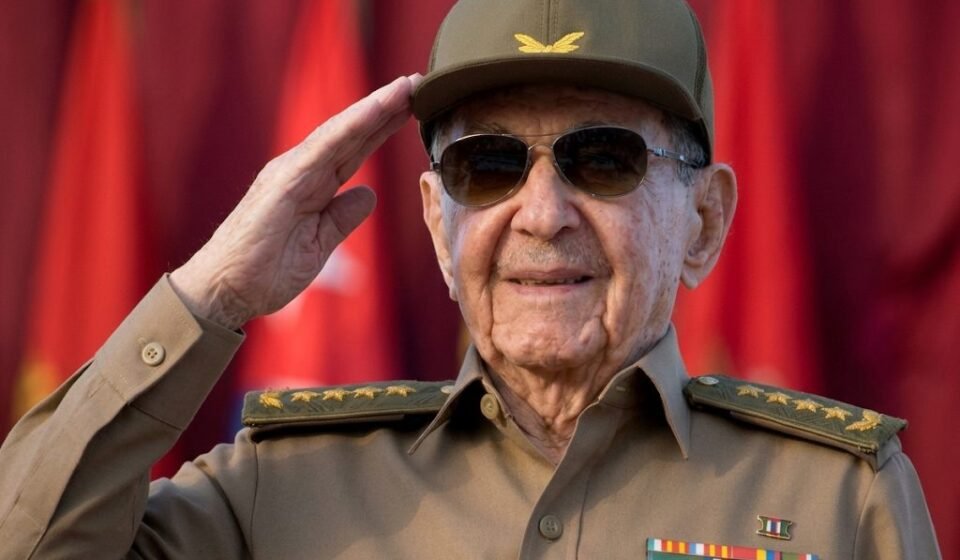
China has strongly condemned the arrest warrant issued by the United States against former Cuban president Raul Castro. Beijing alleges that Washington is unjustly abusing judicial measures with the aim of creating political pressure on Havana. At the same time, Xi Jinping’s country has called for the immediate lifting of the economic embargo on Cuba.
At a regular daily press briefing, Chinese foreign ministry spokesperson Mao Ning said Raul Castro is a highly respected Cuban leader who holds a position of considerable international prestige. She also noted that Cuba’s president and foreign minister have already condemned this US move in strong terms, describing it as a despicable political farce, and that Beijing has taken deep note of their position.
On behalf of the Chinese government, Mao Ning said, ‘We firmly oppose the use of pressure on Cuba through the abuse of the judicial system. We have our full and firm support for Cuba being able to protect its national sovereignty and resist any external interference.’ Demanding an immediate end to the economic embargo and other coercive measures imposed on Cuba, she warned that this US policy is seriously undermining the fundamental rights of the Cuban people to survival and independent development.
China’s strong reaction came after a court in Florida recently issued an arrest warrant against the 95-year-old former Cuban president. The incident dates back to 1996, when two civilian aircraft operated by the Miami-based Cuban expatriate organisation ‘Brothers to the Rescue’ were shot down. Florida Attorney General James Uthmeier announced on Monday that Castro has been charged with conspiracy to commit first-degree murder as four people were killed in the downing of the aircraft.
Raul Castro ruled Cuba from 2008 to 2018. He was also indicted by US federal authorities over the same incident in May this year.
Source: Reuters
Background
On 24 February 1996, Cuban MiG fighter jets shot down two of three unarmed Cessna aircraft of ‘Brothers to the Rescue’ that had taken off from Opa-locka Airport, over international waters and without any warning; the four killed were Carlos Costa, Pablo Morales, Mario de la Pena and Armando Alejandre Jr – WPTV reported this on 19 October. In 1996 Castro was Cuba’s defence minister – Al Jazeera gave this information on 19 October.
Cuba had claimed the aircraft were in its airspace, but the International Civil Aviation Organisation (ICAO) determined that they were in international airspace – NPR reported this on 20 May.
The federal indictment approved by a Miami grand jury on 23 April was made public on 20 May; it brought charges of conspiracy to murder US nationals, destruction of aircraft and four counts of murder, and named five co-accused including Lorenzo Alberto Perez-Perez. Earlier, the federal government had indicted the pilots but had never charged Fidel or Raul Castro – NPR reported this on 20 May.
Reacting to that federal indictment, Chinese foreign ministry spokesperson Guo Jiakun said on 21 May that Beijing firmly opposes the US abuse of judicial means to create pressure on Cuba – Reuters reported this on 21 May.
At a glance
The US economic embargo on Cuba began on 3 February 1962, the day President John F Kennedy signed Proclamation 3447. The Helms-Burton Act, passed in 1996, added the departure of Fidel and Raul Castro from power as a condition for lifting the embargo – Jurist reported this.