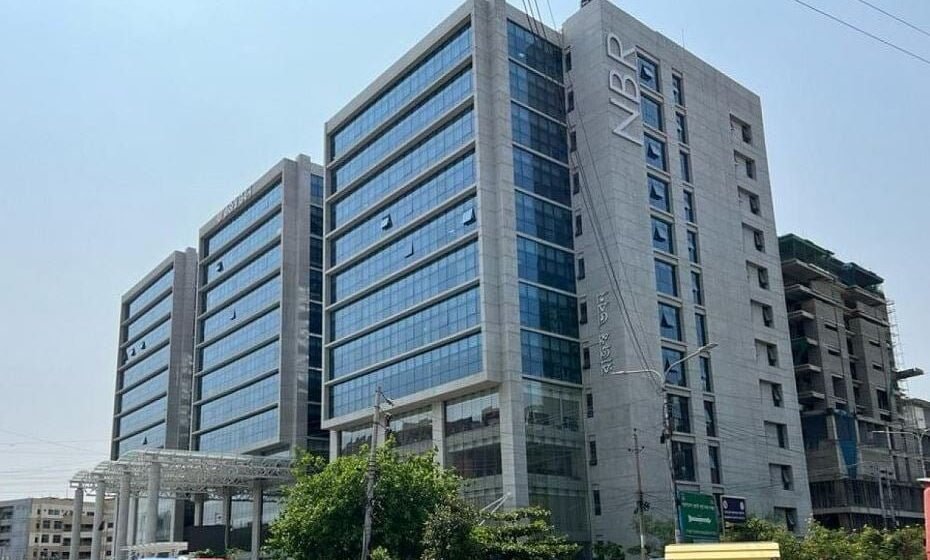

Photo: Collected
The National Board of Revenue (NBR) has taken up a plan for major reforms and capacity building to raise the country’s tax-GDP ratio from the present 6.8 percent to 15 percent by 2035.
To this end, initiatives have been taken to widen the tax net, strengthen tax compliance, bolster digital systems and build a ‘One NBR’ structure to run the income tax, VAT and customs administrations in a coordinated manner.
According to NBR’s plan, the income tax, VAT and customs wings will work in taxpayer management in a coordinated manner instead of as separate administrative structures. With this, the related systems, including taxpayer information, risk management, tax payment and information on arrear revenue, will become more integrated.
The outline of NBR’s reforms and capacity building was presented last month at the second meeting of the parliamentary standing committee on the Ministry of Finance. Emphasis was placed there on the need to increase revenue collection capacity in keeping with government expenditure.
At the meeting, details were presented on NBR’s capacity to meet the demand of government expenditure, the steps taken to reduce the shortfall in the tax-GDP ratio, NBR’s organisational structure and the necessary reforms.
NBR says merely raising tax rates will not do to achieve the revenue target of fiscal year 2026-27 and raise the tax-GDP ratio. For this, it is essential to significantly widen the tax net, increase the use of technology and data, and ensure taxpayers’ tax compliance.
NBR’s outline has set the target of raising the tax-GDP ratio to 8.8 percent in the short term and 10 percent in the medium term. After that, there is a plan to take it to 15 percent by 2035.
NBR has identified investment in revenue administration, skills development, the capacity to exchange data among different systems, risk management and enhanced taxpayer services as the main drivers of revenue growth.
The presentation said about 86 percent of the government’s total revenue now comes from NBR.
In this regard, a senior NBR official told BSS that work to enhance the institutional and operational capacity of revenue collection is being stepped up. This capacity building is now a state priority in order to sustain economic growth alongside increasing domestic revenue collection.
According to NBR data, the country’s tax-GDP ratio was between 7 and 8 percent most of the time in the last 25 years. Although it rose to about 10 percent in fiscal years 2011-12 to 2014-15, it fell again later. This ratio was 6.7 percent in fiscal year 2024-25 and 6.8 percent in fiscal year 2025-26.
NBR says Bangladesh’s current tax-GDP ratio is still at the lowest level compared with South Asia and neighbouring countries. For this reason, the long-term target of raising the ratio to 15 percent by 2035 has been taken.
The presentation given to the parliamentary committee said NBR has analysed data of the last 25 years on the size of GDP, the government budget, revenue and development expenditure, NBR’s revenue collection and growth, government debt and the tax-GDP ratios of neighbouring countries. On the basis of these data, the areas of necessary reform in revenue management have been identified.
The analysis shows that while government expenditure rose 4.47 times in the period reviewed, NBR’s revenue collection rose 3.40 times. So NBR has stressed raising the productivity of revenue collection in line with the growth in government expenditure.
According to the presentation, the average rate of revenue growth from fiscal year 2001-02 to 2025-26 was 13.43 percent. To achieve the target for fiscal year 2026-27, growth will have to be raised significantly compared with the actual revenue income of fiscal year 2025-26.
To strengthen revenue administration, NBR has given immediate importance to taxpayer services, good governance, policy formulation capacity, data management, information technology and human resource development.
The proposed action plan includes plans to review the legal framework and interim arrangements, create an integrated enterprise architecture, a separate master database for each taxpayer, and a common data dictionary and system inventory.
In addition, it has been proposed to form a revenue policy secretariat, create a tax expenditure register and introduce a mandatory template for assessing the fiscal impact of policies.
In the first three years, there is a plan to introduce an integrated taxpayer account, an integrated system of customer and case management, cross-matching of taxpayer data with third-party data, a common system for identifying compliance risk across different taxes, and an integrated data repository of tax payments and arrear revenue.
In the case of customs, NBR has proposed integrating the identity-related data of importers and exporters with risk data related to valuation of goods, VAT and income tax, while keeping specialised border operations in place.
In the following three to five years, the goal is to introduce a near real-time tax compliance analytics system, expand the scope of pre-filled tax returns where there is legal scope, automatic refunds in low-risk cases, and an advanced analytics system to detect networks of entities and fraud.
NBR said support will also be given through revenue policy to boost industrial development and export capacity. As part of this, initiatives have been taken to reduce duty on raw materials and capital machinery, grant VAT exemption in the agriculture, essential commodities and information technology sectors, offer lower income tax rates and tax exemptions in different sectors, and introduce customs automation and single-window service.
The sectors receiving various kinds of support in revenue policy are agriculture, readymade garments, refrigerators and air conditioners, information technology, automobiles and electric vehicles, mobile phones, small and medium enterprises (SMEs), the capital market, healthcare and education, pharmaceuticals and renewable energy.