


Photo: Collected
Representatives of Serbia’s student-backed movement, which won a big victory in last month’s election, are taking office as members of parliament on Tuesday. That election ended 14 years of rule by Aleksandar Vucic’s right-wing party; this is parliament’s first session since then.
Nearly two years of protests following the collapse of part of a railway station canopy in the city of Novi Sad in 2024, which killed 16 people, paved the way for this historic election.
News agency AFP reported this from Belgrade.
The accident was widely blamed on corruption. It sparked the biggest protests in Serbia since the fall of ruler Slobodan Milosevic in 2000. Candidates backed by the student movement won the election on an anti-corruption platform.
At the first session, the movement’s majority will be formally recognised and the elected representatives will be sworn in. Most of them are new to politics, coming mainly from various academic backgrounds. They have pledged sweeping reforms of the country’s various institutions and bodies.
In the 250-seat parliament, the ‘Students’ List’ won 140 seats, enough to form a government on its own. Vucic’s alliance has 103 seats. The remaining seven went to minority parties.
Mirjana Nikolic, an influential candidate of the ‘Students’ List’, told AFP earlier this month, ‘We are preparing very seriously for everything that lies ahead. We are studying the law, parliamentary procedures and the duties of members of parliament.’
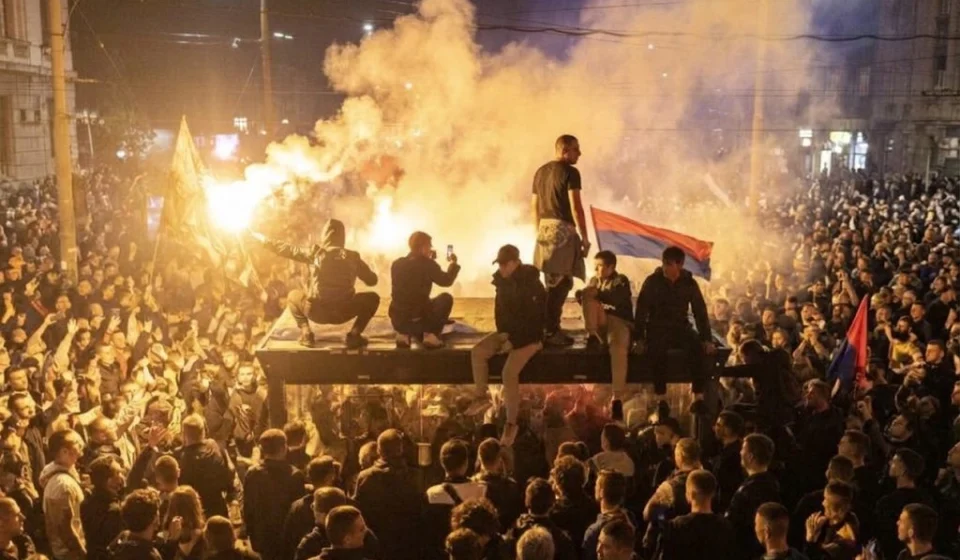
After the students’ victory, there were widespread celebrations in various cities of the country for several days. A huge number of people across the country are expected to watch the live broadcast of this long-awaited session.
Many challenges ahead
Once parliament begins its work, the new majority will have 90 days to nominate a prime minister, present the government’s programme and form a cabinet.
The student movement has pledged sweeping reforms, including improving the quality of healthcare, expanding education and doubling the defence budget.
The new leadership will have to pursue the long-standing goal of European Union membership while maintaining historically close ties with Russia. It will also have to handle relations with Kosovo. Kosovo was once a province of Serbia; it declared independence in 2008, but Belgrade does not recognise it.
With the election of a speaker, a new acting president will also take office. Vucic stepped down as president last September, before the end of his second term, aiming to run for prime minister. Since then, the speaker of parliament has been serving as acting president.
An early presidential election must be announced by 27 November and held by 27 December.
Both the student movement and Vucic’s Serbian Progressive Party are expected to field candidates in the presidential election. However, because of the constitution’s two-term limit, Vucic cannot run again.
Background
According to an Al Jazeera report on 27 September, Aleksandar Vucic resigned as president that day to run for prime minister in the early parliamentary election on 25 October.
By the numbers
According to a Nation Thailand report on 27 October, the Students’ List won 52.6 per cent of the vote in the 25 October election.
According to an AFP report published by Ahram Online on 26 October, turnout in that election was the highest in any Serbian parliamentary election in more than three decades.
Sources
Background sources: Al Jazeera, 27 September 2026; Nation Thailand, 27 October 2026; Ahram Online (AFP), 26 October 2026