
Photo: Collected
Saudi Arabia, Turkey and Pakistan have planned an emergency meeting of their military chiefs as tensions keep rising with the fighting against the Houthis in Yemen and one attack after another on Saudi Arabia. The subject of the meeting will be how Saudi Arabia can be assisted under the Makkah Joint Defence Agreement.
The plan was announced after a meeting of the three countries’ foreign ministers in New York on Thursday. According to a report by the Saudi Press Agency (SPA), Saudi Foreign Minister Prince Faisal bin Farhan Al Saud, Pakistan’s Deputy Prime Minister and Foreign Minister Ishaq Dar and Turkey’s Foreign Minister Hakan Fidan were at the meeting.
However, no details were given about when the military chiefs will sit and what kind of military assistance may be given to Saudi Arabia.
Preparation of Makkah defence agreement
On 7 August, Saudi Arabia, Turkey and Pakistan signed the ‘Makkah Joint Defence Agreement’. The aim of the agreement is to enhance the combined deterrence capability of the three countries and broaden defence cooperation. According to one of its most important clauses, an attack on any one of the three countries will be regarded as an attack on all three.
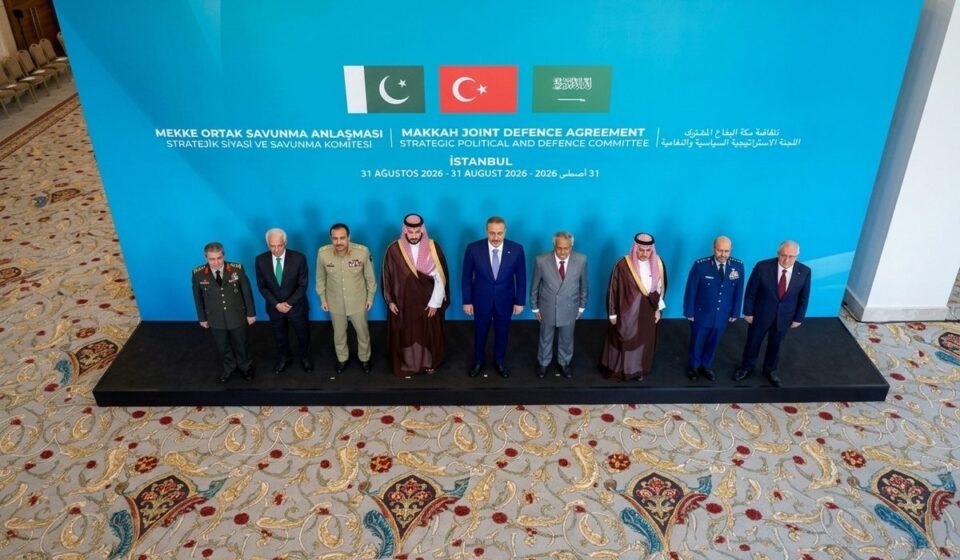
Since the signing of the agreement, work has been under way to build various institutional structures under it. On 31 August, the foreign ministers, defence ministers and military chiefs of the three countries sat for the first time in a meeting of the strategic political and defence committee in Istanbul. A decision was taken there to set up a secretariat in Saudi Arabia and to further deepen military cooperation. Amid the Yemen situation, this possible military meeting is being seen as a major test of that defence framework.
Attacks on Saudi Arabia, Houthis’ counter-claims
The diplomatic activity of the three countries began amid a fresh rise in attacks on Saudi Arabia from Yemen. Saudi Arabia said its air defence system on Thursday shot down six ballistic missiles fired towards Taif and Yanbu.
Major General Turki al-Maliki, spokesperson for the Saudi-led coalition, said any further attack by the Houthis or attempt to create tension will be ‘firmly dealt with’. Earlier, the Saudi civil defence authorities issued alerts in several areas; it was later announced that the fear of immediate danger had passed.
On the other hand, the Houthis claim they carried out missile and drone attacks on an ‘important target’ in Riyadh and on a facility of Saudi state oil company Saudi Aramco in Yanbu. However, damage or casualties in these attacks could not be independently confirmed.
France too in Saudi Arabia’s defence
France too has announced it will stand by Saudi Arabia. President Emmanuel Macron said France will send military equipment and personnel for the protection of Yanbu. In an interview given to TF1 television on Thursday, he said military capabilities including troops, radar and defence systems will be sent to keep the facility protected.
This step by France makes clear that the impact of the Yemen conflict is no longer limited to Saudi Arabia’s security alone; regional and international powers are also becoming more directly involved.
Intense fighting in Yemen, 150 killed in a day
Alongside the attacks on the Saudi border, fighting has also intensified inside Yemen. According to a count by news agency AFP, at least 150 people have been killed in clashes on several fronts in the last 24 hours. Among them are 98 fighters on the side of the internationally recognised Yemeni government and 52 of the Houthis.
These clashes took place in the Kahbub mountains and in various areas between Lahij and Taiz towards the Bab al-Mandeb Strait. This recent intensity is making the protracted conflict more complicated and raising concern over control of the strategic Bab al-Mandeb Strait.
Houthis’ strong position at Bab al-Mandeb
The Houthis have increased their presence across vast areas of the Red Sea coast. They also claim to have taken control of the port city of Mocha and several strategic islands. This has further strengthened their position around the Bab al-Mandeb Strait.
The Associated Press (AP) said about 12 percent of the world’s total trade passes through Bab al-Mandeb in normal times. As a result, if a major crisis arises in the security of this strait, its shock will not remain limited to Yemen or Saudi Arabia; global trade and the supply system may also be heavily affected.
The internationally recognised Yemeni government has also called for more international intervention. At the UN General Assembly, the country’s Vice President Abdullah Abdulqader al-Alimi-Bawazir warned that the Houthis’ control around the strait is creating a major economic risk. He alleged that the Houthis have turned freedom of navigation into a tool of pressure and that their activities are ‘holding the entire global economy hostage’.
More than 2,30,000 displaced in September alone
With conflict spreading anew, Yemen’s humanitarian situation is also deteriorating rapidly. The UN refugee agency UNHCR said more than 2,30,000 people have been newly forced to leave their homes since the beginning of September. Around 52 lakh people were already internally displaced in the country.
According to UNHCR data, families have been displaced because of clashes in various governorates including Hodeidah, Taiz, Lahij, Aden, Abyan, Marib, Al-Dhalea and Shabwa. Many have had to set out in search of safe shelter at short notice with only a few belongings. Shelter, food, safe water, medical care and security are now their most urgent needs; at the same time, pressure on local communities and shelter centres is also increasing.
All in all, the Houthis’ attacks around Saudi Arabia, fresh intense fighting inside Yemen and the strategic importance of Bab al-Mandeb are pushing the conflict towards a major regional crisis. Against such a backdrop, the possible meeting of the military leadership of Saudi Arabia, Turkey and Pakistan under the Makkah defence agreement may add a new dimension to the security equation of the Middle East.