


Photo: Collected
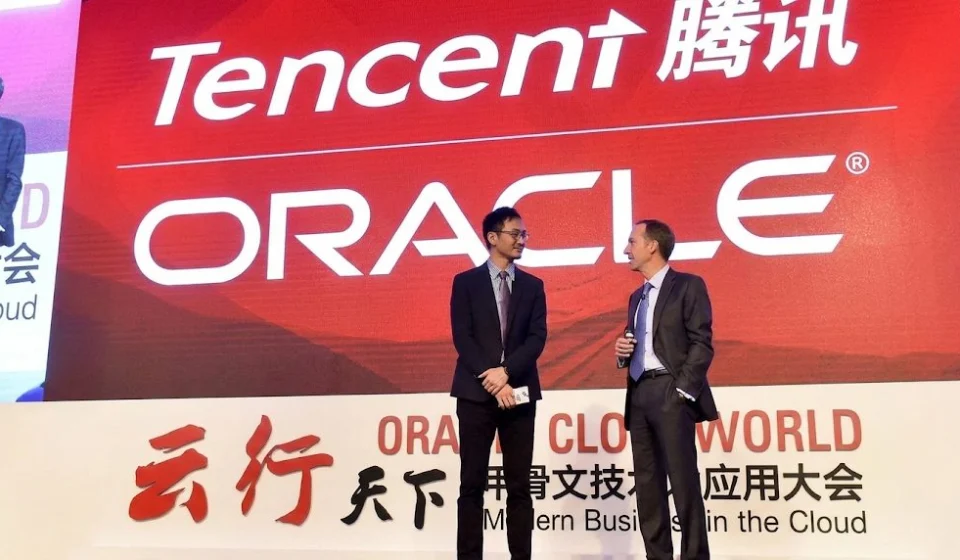
Facing intense diplomatic and political pressure from the Trump administration, American cloud giant Oracle has cancelled a massive $7 billion AI chip lease deal with Chinese technology company Tencent.
The move comes just as tensions between the two superpowers, the United States and China, are rising over artificial intelligence (AI).
Oracle is led by billionaire Larry Ellison, a close supporter of Republican President Donald Trump. Under the five-year deal, the company was to give Tencent access to nearly 100,000 advanced AI chips through its own data centres in South-East Asia.
News of the deal first emerged in September. It was Tencent’s largest foreign lease deal for using cloud servers outside Asia. Thanks to the deal, Tencent was getting access, in data centres abroad, to advanced chips that are banned from being imported directly into China because of strict US trade restrictions.
Citing two separate sources familiar with the matter, the Financial Times reported that senior US government officials contacted Oracle and expressed grave concern about the security risks and geopolitical repercussions of the deal with Tencent.
At the same time, Tencent also came under pressure inside China. Top government officials of Guangdong province in southern China visited the company’s headquarters and instructed it to reduce its dependence on US chips and help expand China’s domestic chip industry.
Faced with this intense pressure from both sides, the two parties were ultimately forced to cancel the deal.
Neither Oracle, Tencent nor the White House was willing to comment immediately on the cancellation of the deal.
Chips made in China are not suited to complex tasks such as building AI models, and on top of that there are Washington’s strict export restrictions. For this reason, leading Chinese technology companies such as ByteDance, Alibaba and Tencent are choosing South-East Asia as a hub for data centres. There, they had been improving their own AI models using Nvidia’s latest processors.
Under current US law, giving Chinese companies access to chips on foreign soil is not entirely illegal. Even so, pressure on US cloud companies to wind down China-related business keeps growing.
It has recently emerged that US chipmaker Nvidia has told its cloud customers clearly that at least 51 per cent of their total cloud services must be sold to non-Chinese customers.
According to available information, Oracle has several data centres in South-East Asian countries, including Malaysia. There, the company works as a major technology supplier to a number of Chinese firms, including ByteDance.
After the US tightened its chip export restrictions, demand from Chinese AI companies for servers in South-East Asia has increased many times over. This has sharply pushed up lease terms, initial deposits and overall prices for cloud data centres there.
Tencent had recently increased its infrastructure spending many times over to develop a new AI model called ‘Hunyuan’; the model is a rival to Alibaba’s ‘Qwen’ model. Technology analysts believe Washington’s close scrutiny and the cancellation of this $7 billion mega deal with Oracle are a major blow to the Chinese tech giant in the global AI race.
Background
Citing the Financial Times report, The Next Web reported on 2 October that Tencent was to pay about 30 per cent of the deal’s value in advance.
A Reuters report published in The Standard said Reuters could not immediately verify the Financial Times report.
At a glance
According to a report by The Next Web on 2 October, US export rules allow such cloud leases abroad; the Reuters report noted that these chips are not available in China because of restrictions from both Washington and Beijing.
Sources
Background sources: The Next Web, 2 October 2026; The Standard (Hong Kong) / Reuters, 4 November 2026