


China to cut tariffs on C$400 million of goods as Carney and Xi strike new deal in Shenzhen

Photo: Collected
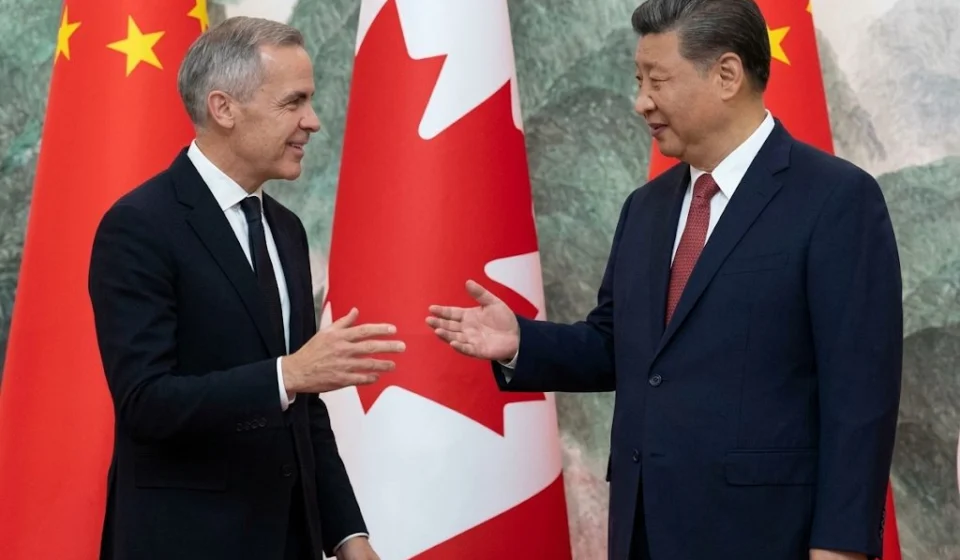
Canadian Prime Minister Mark Carney sat down with President Xi Jinping in China’s Shenzhen on Tuesday. The meeting produced the announcement of a new trade deal between the two countries. The deal comes just as Canada’s strains with the United States continue.
It also signals a further strengthening of economic ties between the two countries.
According to a Canadian government statement, China has agreed to cut tariffs on Canadian pork and seafood products worth around C$400 million (US$280 million).
Canada said tariff exemptions would remain in place for Chinese steel and aluminium products that are not in sufficient supply in its own market. The country also plans to send a large-scale trade delegation to China in 2027.
In the statement, Carney said Canada and China have reshaped their relationship in the interests of the citizens of both countries. His government is working towards two goals: building economic capacity at home and diversifying trade relationships abroad, he said.
Chinese state media reported that Xi Jinping said at the meeting that improving China-Canada relations is not only vital to the interests of the people of both countries but also important for world peace, stability, development and prosperity.
China ranks second only to the United States among Canada’s trading partners. Trade between the two countries exceeded C$125 billion in 2025.
The US-Canada trade dispute has intensified during US President Donald Trump’s second term. In this situation, Carney has moved to reduce dependence on the United States and expand economic ties with countries in Europe and Asia.
During a visit to Beijing last January, the two leaders agreed to build a ‘strategic partnership’ and to ease long-standing trade disputes. At Tuesday’s meeting, Carney highlighted the greater predictability and stability coming into the two countries’ relations. Source: CNN
Background
After meeting Xi Jinping in Beijing on 16 January, Carney announced that Canada would cut its 100 per cent tariff on Chinese electric vehicles, and in return China would cut tariffs on Canadian agricultural products, WUSF reported, citing AP. According to UNB, the deal initially allowed up to 49,000 Chinese electric vehicles into the Canadian market.
By the numbers
According to Investment Executive, in March 2025 China imposed a 25 per cent tariff on Canadian pork and seafood such as lobster.
The January deal made no change to the 25 per cent tariff on Canadian pork, Global News reported on 16 January.
Sources
Original report: Bangladesh Pratidin
Background sources: WUSF (AP), 16 January 2026; UNB, January 2026; Investment Executive, January 2026; Global News, 16 January 2026