
Photo: Collected
Chinese President Xi Jinping has begun a rare visit to the United States just when Washington-Beijing relations are at extreme tension over artificial intelligence, world politics and the Taiwan issue. Soon after the visit began, the United States announced a temporary pause in the ongoing trade war between the two superpowers. Following a meeting of the two countries’ top leaders and continuous bilateral talks, the previously announced tariff suspension has been extended by two months.
US Treasury Secretary Scott Bessent confirmed to the media that the two sides have agreed to reduce trade tensions and not to impose any new trade restrictions. The earlier trade truce was due to expire in November this year. Under the latest understanding, it has been extended until 10 January next year. He indicated that at the international summit to be held in China next November and at the meeting in Florida in December, the top leadership of the two countries will discuss in detail whether this pause can be turned into a full-fledged deal.
The decision was formally announced right after a meeting with Chinese Vice Premier He Lifeng at the World Bank headquarters in Washington. Beyond the extension of the trade deal, there were also indications of new understandings in important areas such as the financial services sector and the purchase of agricultural products.
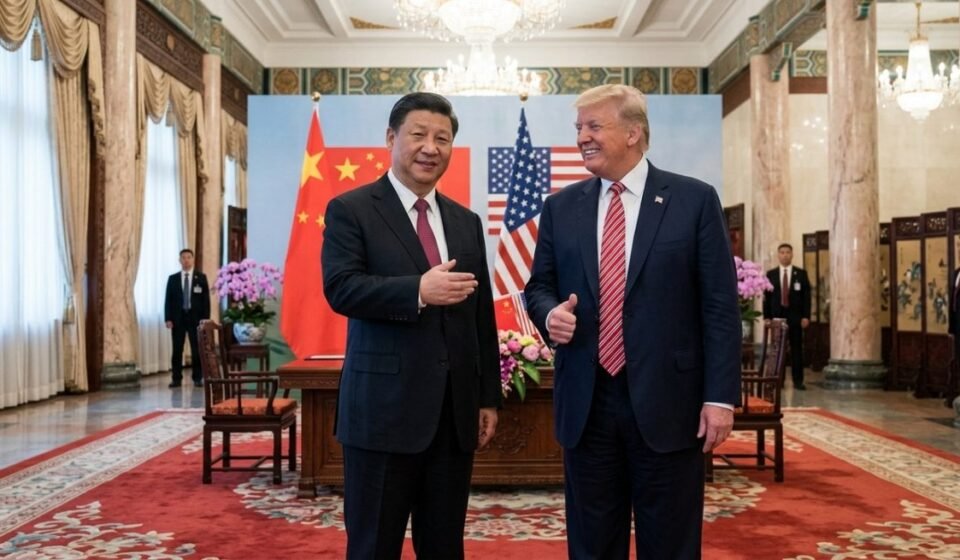
The warm reception given to Xi Jinping on this three-day visit has created quite a stir in diplomatic circles. This is the first official visit by a Chinese president to US soil in more than a decade. Although by custom the reception was supposed to be at the White House, President Trump himself went to Joint Base Andrews air base and gave Xi Jinping a red carpet reception. He was welcomed with a military honour guard on both sides of a hundred-foot-long red carpet, a special air force display and a 21-gun salute. According to diplomats, such special protocol was arranged precisely to strengthen the foundation of the understanding.
However, international analysts believe the diplomatic and economic differences between the two countries are still stark behind this outward cordiality. At a meeting in South Korea last year too, an attempt was made to reduce the intensity of the trade war by announcing an easing in the supply of rare earth minerals and the export of high-tech components. Beyond trade, Washington and Beijing are in opposing positions on the Middle East situation and China’s outlook on the Taiwan question. Despite that, on arriving for the visit, the Chinese president called on the two countries to work as partners rather than rivals in the interest of world peace and the global economy.