
Photo: Collected
By extending the trade truce, the United States and China have gained some time for now. But analysts have warned that the time to settle the long-standing strategic rivalry between the world’s two largest economies is running out fast.
News agency AFP reported this.
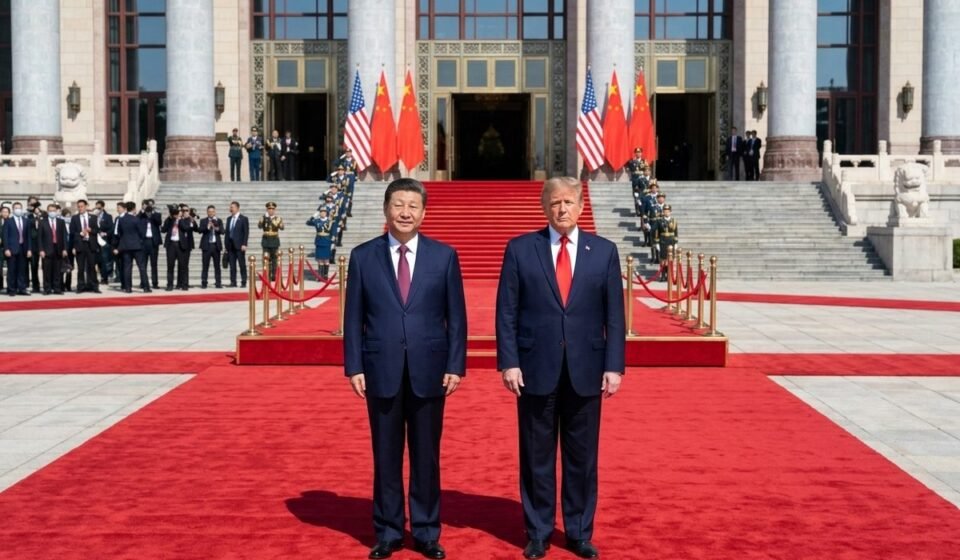
On Friday, US President Donald Trump and Chinese President Xi Jinping concluded a lavish summit.
After the meeting, Trump said the two leaders would meet two more times this year.
Although the two leaders’ talks were held in a friendly atmosphere, sharp differences still remain between the two countries on various issues including trade, technology, Taiwan, defence, rare earths and industrial policy.
Daniel Russel of the Asia Society Policy Institute said sharp disagreements are still going on in various areas of the two countries’ relationship.
Daniel Kritenbrink, a consultant at The Asia Group and a former US official, said there is no doubt that the leaders of both countries want to keep the relationship stable at least until the end of the year.
However, in his view, some more real and visible results will have to be shown to sustain this truce in the long term.
Kritenbrink said some US officials think China has not properly fulfilled in practice many of the commitments made at earlier meetings. As a result, there is also deep frustration within the US administration over China’s actions.
The two countries had agreed to a trade truce after the meeting between Trump and Xi in South Korea last year.
Before that, the United States and China had imposed tariffs at sweeping rates on each other’s goods. At one stage, the two countries’ tit-for-tat tariff rates even exceeded 100 percent.
Under the deal, China pledged to buy more agricultural products, including soybeans, from the United States. At the same time, Beijing decided to suspend restrictions on the export of rare earth elements for one year.
The deal was originally supposed to expire in November. However, the two countries decided this week to extend it until 10 January, US Treasury Secretary Scott Bessent said.
US Trade Representative Jamieson Greer told CNBC on Friday that Washington essentially sees such an extension period as a ‘compliance period’, or a time for implementing commitments.
Kritenbrink said that in the eyes of US officials, China is doing roughly as much as is needed to keep the deal alive — no more than that.
In his words, such a situation is not sustainable in the long term.
Mary Lovely of the Peterson Institute for International Economics said extending the deal for a short time was the United States’ preferred decision.
In her view, China wanted to renew the deal for a longer period. But a major reason for the United States’ current concern is the supply of magnets made from rare minerals or rare earth elements. So Washington does not want to leave the situation under China’s control for too long.
Lovely further said it is also not clear how much the United States’ threat of imposing high tariffs is now affecting China as before.