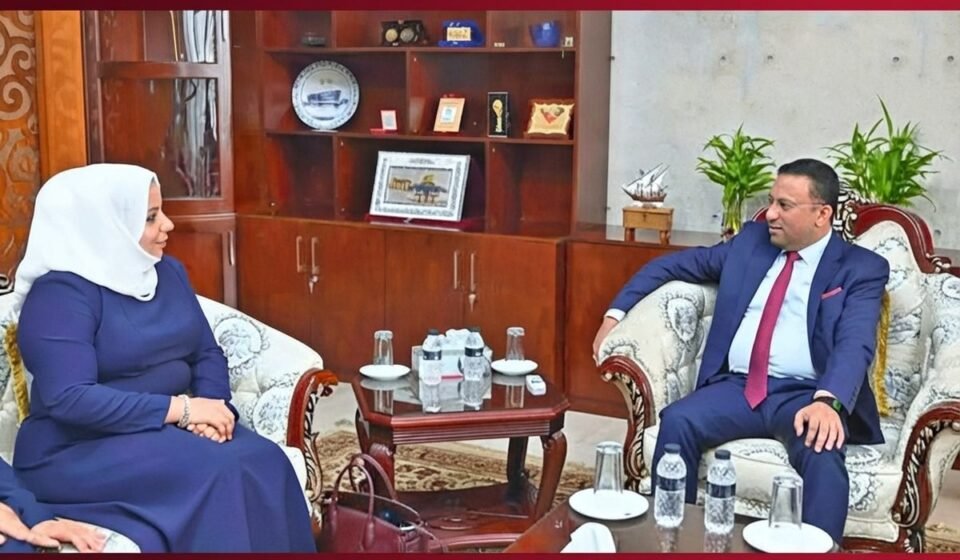

Photo: Collected
State Minister for Foreign Affairs Humayun Kabir has called on the international community to play a stronger role in ensuring the speedy, safe, voluntary and dignified repatriation of the Rohingyas to Myanmar. At the same time, he warned that if the crisis is prolonged, it could create widespread security risks and fuel illegal migration.
He made the remarks when a visiting delegation led by Apsana Begum MP, chairperson of the UK’s All-Party Parliamentary Group (APPG) on Bangladesh, paid a courtesy call on him at the Ministry of Foreign Affairs on Tuesday (6 October).
The information was given in a press release of the ministry.
The delegation also included Shockat Adam MP, a member of the House of Commons, and Lord Qurban Hussain, a member of the House of Lords.
Humayun Kabir said the protracted Rohingya crisis is no longer confined to a humanitarian concern alone; rather, it is also having a wider impact on regional security and irregular migration.
The delegation is scheduled to visit the Rohingya camps tomorrow. They reiterated their cooperation in easing the plight of this displaced population.
The members of the delegation pledged to remain vocal in the UK Parliament and various international forums for the sustainable repatriation of the Rohingyas to their homeland and for the continuation of humanitarian assistance.
Welcoming the delegation, Humayun Kabir praised the APPG’s continued interest in strengthening Bangladesh-UK relations. At the same time, he highlighted the UK government’s cooperation in Bangladesh’s democratic consolidation and reform initiatives. He also mentioned the APPG’s role as a bridge between the UK Parliament, Bangladesh and the British-Bangladeshi community.
Highlighting Bangladesh’s progress and the real situation on the ground, the state minister for foreign affairs sought the group’s cooperation in further increasing engagement with the UK Parliament.
Various issues including parliamentary cooperation and exchange, democratic consolidation, trade and investment, migration, skills and human resource development, and human rights were discussed at the meeting.
Besides, both sides exchanged views on various regional and global issues and expressed interest in continuing cooperation through bilateral and multilateral forums.