
Photo: Collected
US President Donald Trump has claimed that he has received an assurance of diesel supplies from Russia in order to bring down fuel prices. Energy analysts, however, think there is little likelihood that the initiative will significantly change diesel prices on the world market. And Ukraine sees this move to grant a concession on Russia’s fuel exports as a weak decision.
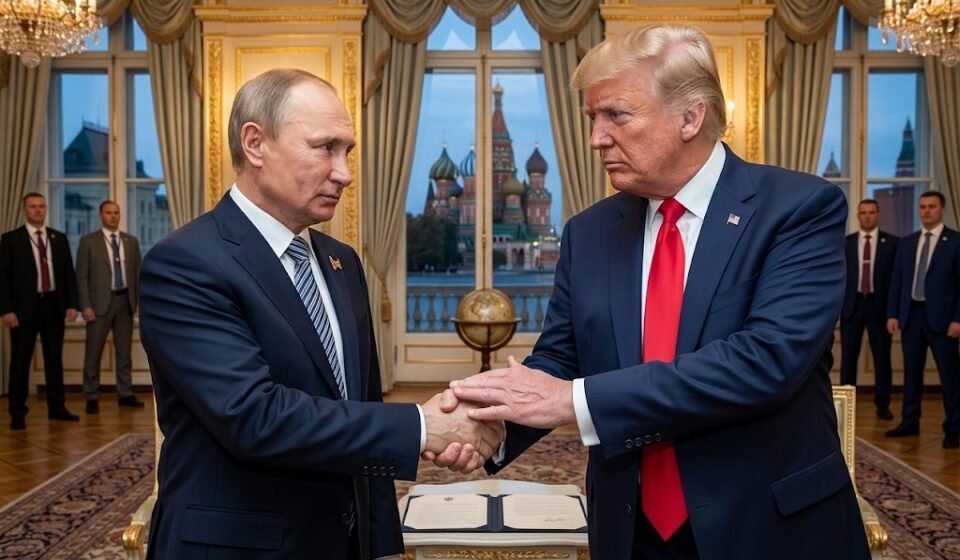
Trump said an understanding on diesel supplies had been reached with Russian President Vladimir Putin as part of the effort under way to bring down fuel prices ahead of the midterm elections in the United States. According to his claim, Russia will immediately supply more than three lakh tonnes of diesel to the world market; there is also a pledge to provide a further five lakh tonnes in November.
According to energy sector analysts, this quantity of diesel is not very large compared with world market demand. So even if supply increases, its effect on prices may remain limited. The news of the understanding has also sparked anger in Ukraine. Kyiv fears that if fuel exports increase, more money will come into Russia’s hands for waging the war.
In a post on social media on Friday, Trump said Russia could supply several million more tonnes of diesel after the initial consignment. However, how large the subsequent supply will be depends on the capacity of Russia’s diesel refineries.
Equal to a day and a half of US demand
By the figures Trump has announced, a total of eight lakh tonnes of diesel is due to come from Russia in the first two phases, which is equal to about 60 lakh barrels. By the estimate of the US Energy Information Administration (EIA), this quantity of fuel can meet about a day and a half of the country’s demand.
Dan Pickering, founder and chief investment officer of Pickering Energy Partners, reckons that diesel supply on the world market may rise by 5 to 6 per cent by the end of the year.
In an email he said this initiative to increase supply could be helpful, but it would not bring any major change to the diesel situation on the world market. In his view, because the supply quantity was stated in tonnes instead of barrels, the number may seem comparatively large to ordinary people. This is essentially a political step; it is not an event of the kind that brings radical change to the fuel market.
Russia has kept diesel exports restricted for several months. In early July, Ukraine carried out drone attacks on the country’s refineries. Then, when a domestic fuel crisis emerged, Moscow banned diesel exports. As a result, diesel supply on the world market fell by about eight lakh barrels a day. Pressure on fuel supply had already been created because of the United States’ war centring on Iran. When the export ban was extended last month, fears arose that fuel costs would rise further.
Putin gives assurance, Trump optimistic
According to the account released by the Kremlin, Putin told Trump in the two leaders’ phone call that Russia is ready to supply oil and petroleum products to the global market, including the United States. Quoting Putin’s remarks, the Kremlin further said he is confident that this initiative will have a positive effect on the entire world economy.
Similar optimism was heard in Trump’s voice too. Speaking to journalists at the White House on Friday, he said oil prices were already falling fast and that they were satisfied with the initiative to obtain supplies from Russia.
In another social media post, Trump claimed that as a result of the United States’ ‘full control’ over the Strait of Hormuz and this announcement on Russian fuel supplies, diesel prices will fall at record speed around the world, including in the United States.
Energy analysts, however, do not agree with this claim. They say that even if Russia delivers the promised diesel, it may bring only temporary relief to the market; there is little likelihood that the long-term crisis of supply and prices will be removed.
Gregory Brew, an analyst with Eurasia Group’s energy, climate and resources team, said that if Russia really does supply diesel, it will have to withdraw the export ban that has been in force for several months. Even then, it is reasonable to see this initiative as a temporary relief measure and not call it a major solution.
Brew reckons that in exchange for this initiative by Trump, Putin may perhaps expect that Ukraine will stop attacking Russian refineries. However, he does not think Ukrainian President Volodymyr Zelensky will agree to that.
Will Russia be able to keep its promise?
The doubts are not only those of market analysts; some former US officials have also raised questions about Russia’s capacity to deliver on the promise. In their view, it is not clear whether Putin will be able to supply the quantity of diesel that Trump has mentioned.
At the close of trading on Friday, the price of diesel futures fell by about 4 per cent. This price fall, however, cannot be identified with certainty as a direct result of the Russian supply announcement, because other economic and geopolitical factors beyond supply expectations are also at work in determining prices in the market.
According to Richard Nephew, former deputy chief coordinator for sanctions policy at the US State Department, such an understanding with Russia could have a major effect on international confidence in the sanctions regime and on its effectiveness. His question is: if the United States shows a need to relax sanctions in order to deal with its own economic problems, how will demands to apply the same reasoning in the case of other countries be credibly rejected?
According to another former senior State Department official, whether Putin will in reality be able to deliver the diesel is not the only matter to consider. He thinks that conveying to Trump a message of success in bringing down fuel prices before the election, and creating its potential effect on the market, may also be among Putin’s aims.
As this Trump-Putin phone call took place at the very outset of talks with Ukraine, questions have also arisen about the choice of its timing. That former official commented that, although he adopts various kinds of tactics, Putin is no fool.
Kyiv angered by concession move
Ukraine is angered by the move to open the way for Russia’s diesel exports. Kyiv has long taken a position in favour of imposing tougher sanctions on Russia’s fuel exports. Its argument is that the money earned from oil and gas exports is one of the main sources of funding for Russia’s conduct of the war.
Meanwhile, Ukraine has stepped up attacks on Russia’s energy infrastructure over the past few months. Although Trump called for the attacks to stop, Kyiv has not halted. This very week the country claimed to have carried out attacks on four Russian refineries.
Zelensky has described the move to give Russia the opportunity to export diesel as a weak decision by strong allies. On social media he said this will bring in more money for the war, increase people’s suffering and strengthen Russia’s capacity to continue the war against Ukraine. In his words, this decision will give Putin the opportunity to wage even more war.
Recent months have become especially deadly for Ukraine’s civilians. The country’s air defence system has a shortage of missiles; taking that opportunity, Russia has carried out almost uninterrupted air strikes on various Ukrainian cities. The report mentions that more than 30 people were killed on Thursday in an attack on a bus stop in eastern Ukraine.
Two leaders’ phone call while talks under way
The time at which the announcement on Russian diesel supplies came is especially significant for Ukraine. That is because at that very time a high-level Ukrainian delegation had arrived in Miami, Florida; the purpose was talks with US special envoy Steve Witkoff and Trump’s son-in-law Jared Kushner.
Zelensky said that while their delegation was speaking with the US side in Florida, at that very time the US president was holding discussions with the Kremlin leader, whom he holds responsible for the war and aggression.
Ukraine believes the prospect of granting a concession on Russia’s fuel exports at such a time could weaken Kyiv’s diplomatic position. The country has long argued that if Russia’s energy income can be reduced, its financial capacity to wage the war will also come under pressure.
On the other hand, the Trump administration is looking for various ways to reduce the cost of living in the United States. As part of that, an initiative has also been taken to temporarily relax some restrictions on ‘red dye diesel’, a specially dyed diesel used in farming.
According to the report, Trump did not raise in the phone call with Putin the matter of the mysterious death of a researcher who worked on plague at a laboratory. At the main centre of the discussion were fuel prices and diesel supply, which have become an important political issue for Republicans in the United States.
How much effect there may be on the market
Analysts say that even if the understanding with Russia is implemented, it will not be enough to fully overcome the diesel crisis on the world market. Along with the announcement of increased supply, the withdrawal of Russia’s export ban, the production capacity of the refineries and the situation regarding Ukraine’s attacks must also be taken into consideration.
If sanctions on Russia’s fuel exports are relaxed, the potential diplomatic and political effects of that are equally important. From the effort to bring down fuel prices, US consumers may on the one hand get economic relief; on the other hand, there is concern over whether that step increases Russia’s scope to finance the war.
All in all, Trump’s announcement has indeed created the possibility of increased diesel supply, but there is no certainty that prices on the world market will fall significantly. The actual outcome of the initiative will depend on three things: how much fuel Russia can supply, what decision is taken on the sanctions, and in which direction the situation in the Ukraine war moves. Source: CNN