


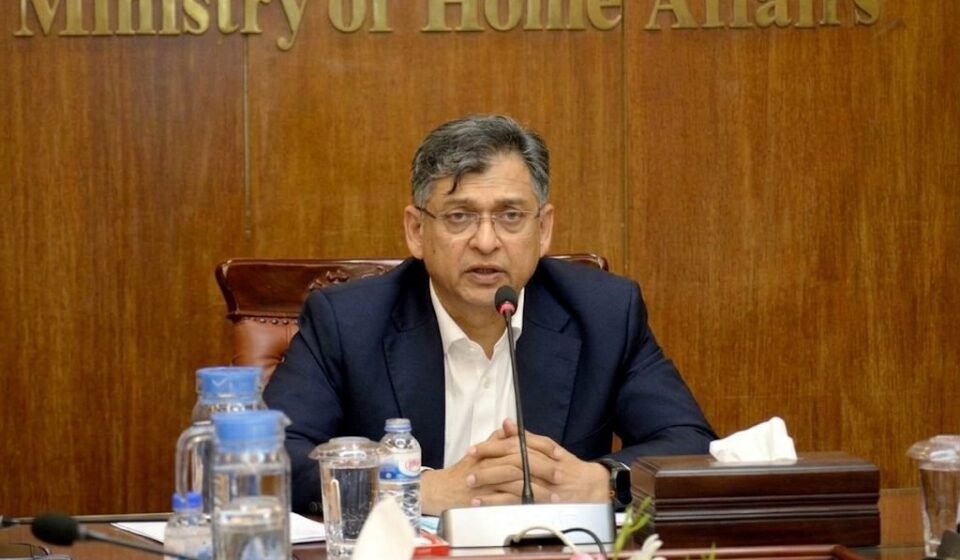
Constitution amendment committee hears families of enforced disappearance victims, pledges constitutional and legal safeguards

Photo: Collected
The special committee on constitutional amendment has heard the experiences of people who were victims of enforced disappearance, killing and torture during the Awami League (activities currently banned) government, and of family members of those killed. After the meeting, the committee said necessary measures would be taken to prevent enforced disappearances, extrajudicial killings, political vendettas and deaths in custody in future. Matters that need to be in the constitution will be added to it, while whatever can be done through laws, rules and regulations will be implemented that way.
The committee met at the Jatiya Sangsad on Wednesday. The meeting began at 2:30pm and ended after 4pm. Afterwards, committee chairman and home minister Salahuddin Ahmed spoke to journalists.
He said the same message came from everyone at the exchange of views: measures must be taken so that no one in the country is subjected to enforced disappearance again in future. Speedy and fair trials were sought in the cases filed over enforced disappearances. Families of those who were disappeared and have still not returned also appealed for assistance. He also noted that the government has already enacted an enforced disappearance prevention and remedy law.
Saying that he himself was once a victim of enforced disappearance, the home minister said their wish is that those times never return to Bangladesh. They want the culture of enforced disappearance to end forever. Students and the public shed blood in the hope of a Bangladesh where there will be no more extrajudicial killings, no one will be a victim of enforced disappearance or political vendetta, and no one will die in custody. The government will duly uphold their appeal. What needs to be in the constitution will be kept in the constitution, and where laws and rules are needed, those will be made.
Asked by journalists whether there are plans to add any new provision to the constitution to prevent enforced disappearances, the home minister said Article 32 of the constitution recognises the right to life and personal liberty. There is sufficient recognition of this in the constitution.
In reply to another question, the committee chairman said the opposition is protesting on the streets. Had they come to the constitution amendment committee with their demands, the committee could have heard them. But they are giving more importance to street movements.
On the caretaker government system, Salahuddin Ahmed said the system must be introduced. The committee will examine everything: by which method the government will be formed, what the framework will be, and how controversy can be avoided. Even when a bill is later placed in the Jatiya Sangsad, there will be debate on it and various suggestions and proposals may also come.
Asked about the inspector general of police (IGP)’s remarks on crossfire, the home minister said an explanation of the IGP’s comment was given later. While talking about strict enforcement of the law, he may have chosen that word carelessly. In his view, such a choice of words is not correct.
The home minister claimed that there had been no crossfire, extrajudicial killing or enforced disappearance in the eight months of the BNP government. One allegation came up, and the government investigated it. Human rights organisations have also been urged to investigate independently. When many international human rights organisations raised questions, they too were urged to investigate. But so far no one has made a ‘material’ allegation.
Asked whether those from the current opposition who had been victims of enforced disappearance were invited to the meeting, Salahuddin Ahmed said Jamaat-e-Islami MP Mir Ahmad Bin Quasem had been invited, but he did not come.
A Jatiya Sangsad Secretariat press release said that, as family members of victims of enforced disappearance, MPs Sanjida Islam, Hummam Quader Chowdhury, Anisur Rahman and Tahsina Rushdi highlighted at the meeting their experiences of torture and of being deprived of legal protection and justice. They stressed effective steps so that such incidents do not happen again. Demands were raised at the meeting for preventing enforced disappearance, strengthening the justice system, ensuring justice on a priority basis, recognising victims of enforced disappearance and rehabilitating affected families.
Among committee members, law minister Md Asaduzzaman, Zainul Abedin, information minister Andaleeve Rahman, state minister for expatriates’ welfare Md Nurul Haque and state minister for social welfare Farzana Sharmin attended the meeting.
Background
According to a report by The Daily Star Bangla on 6 September 2026, the Enforced Disappearance Prevention and Remedy Bill 2026, placed by home minister Salahuddin Ahmed, was passed in parliament by voice vote that night. The law gives the police the main responsibility for investigating enforced disappearances, whereas the interim government’s earlier ordinance had vested this power in the National Human Rights Commission.
Sources
Original report: Ajker Patrika
Background sources: The Daily Star Bangla, 6 September 2026