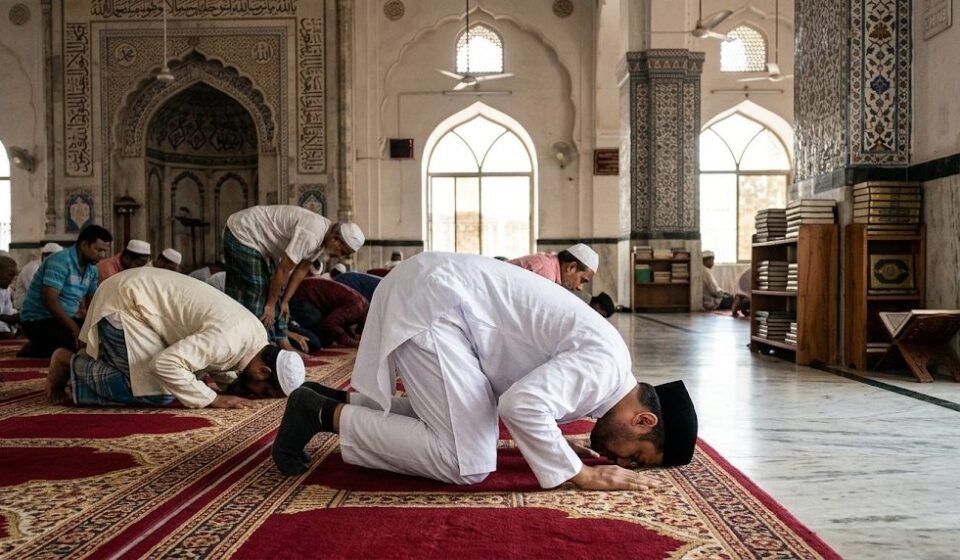
Prayer will be the first to be judged on the Day of Judgement: its importance in the Quran and Hadith

Photo: Collected
Prayer (namaz) is the deepest expression of the relationship between the servant and the Lord; it is one of the principal acts of worship in a believer’s life. Care for prayer is a reflection of faith and obedience to Allah. The Holy Quran and Hadith contain clear guidance on its immense importance, as well as stern warnings.
Commanding that prayers always be performed properly, Allah the Exalted has declared in the Holy Quran, ‘Guard strictly the prayers, and (especially) the middle prayer. And stand before Allah in devout obedience.’ (Surah Al-Baqarah: 238)
A mark of the believer’s faith and success
The Holy Quran says, ‘Those who believe, do good deeds, establish prayer and give zakat will have their reward with their Lord. They will have no fear, nor will they grieve.’ (Surah Al-Baqarah: 277)
Another verse says, ‘Those who establish prayer and spend (in the way of Allah) from what We have provided them, it is they who are the true believers. For them are high ranks with their Lord, forgiveness and honourable provision.’ (Surah Al-Anfal: 3-4)
Prayer will be the first to be judged in the Hereafter
On the Day of Judgement, the reckoning of a servant’s deeds will begin with prayer, and the judgement of other deeds will be determined on its basis. Abu Hurairah (RA) said: I heard the Messenger of Allah (PBUH) say, ‘On the Day of Judgement, the first of a servant’s deeds to be reckoned will be prayer. If it is found sound, he will be blessed and successful. And if it is not found sound, he will have failed and be a loser.’ (Jami at-Tirmidhi: 413)
Consequences of neglecting prayer
The Messenger of Allah (PBUH) said, ‘Whoever performs prayer properly, it will appear for him on the Day of Judgement as light and proof. And whoever does not observe it properly will have no light and no proof on the Day of Judgement, and he will have no means of salvation that day. On that day he will be with Qarun, Pharaoh, Haman and Ubayy ibn Khalaf.’ (Musnad Ahmad: 6576)