


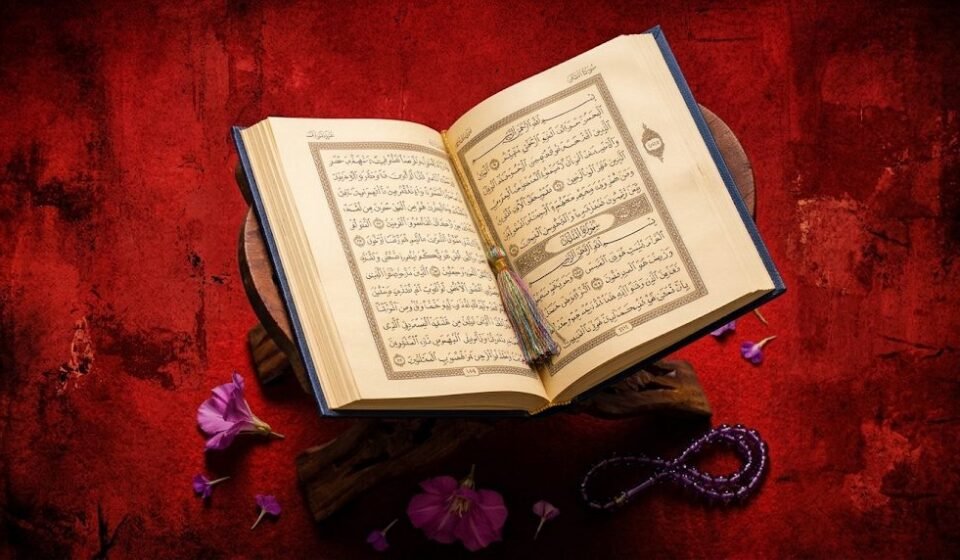
Intercession on Judgement Day, protection in the grave: why recite Surah Al-Mulk regularly

Photo: Collected
Every surah of the Quran is a source of guidance and blessing for the believer. But several hadiths speak of the special status of Surah Al-Mulk. According to the narrations, on the Day of Judgement this surah will intercede for those who recite it regularly; the virtue of protection from the punishment of the grave is also associated with it. The Messenger of Allah (peace be upon him) himself was careful to recite this surah at night.
The verses of the surah remind us of Allah’s infinite power, the perfect order of creation, the purpose of life and death, and accountability in the hereafter. So it is important not only to recite it but also to try to understand its meaning and lessons.
About the surah
Surah Al-Mulk is the 67th surah of the Quran, placed at the very beginning of the 29th para. It has 30 verses and two rukus. ‘Mulk’ means kingdom or dominion; the surah opens with a declaration of Allah’s absolute dominion and glory.
It describes the creation of the heavens and the planets and stars, the perfection of the created world and the signs of Allah’s power. By setting out the purpose behind the creation of life and death, it reminds people of their true goal. There is good news of reward for those who fear Allah and stay steadfast on His path, and there is also mention of the consequences of disobedience and turning away from the truth. In the final part, by recalling Allah’s blessings, it brings to the fore human helplessness and dependence on Him, which encourages gratitude, obedience and preparation for the hereafter.
Intercession for the reciter
Hazrat Abu Hurairah (may Allah be pleased with him) narrated that the Messenger of Allah (peace be upon him) said there is a surah of 30 verses in the Quran which will keep interceding for its reciter until he is forgiven; it is ‘Tabarakalladhi biyadihil mulk’, that is, Surah Al-Mulk. (Jami at-Tirmidhi: 2891, Sunan Abu Dawud: 1400, Sunan Ibn Majah: 3786 and Musnad Ahmad: 7975)
Hadith number 3838 of Mustadrak al-Hakim says this 30-verse surah interceded for a man, freed him from Hell and brought him to Paradise. These narrations show the status of the surah; so it is the duty of the believer to recite it regularly and carry its teachings into life.
Protection from the punishment of the grave
Seeking Allah’s refuge from the punishment of the grave is an important practice for the believer. In hadith number 2867 of Sahih Muslim, the Messenger of Allah (peace be upon him) said, ‘Seek refuge with Allah from the punishment of the grave.’ In a narration from Hazrat Abdullah ibn Masud (may Allah be pleased with him), Surah Al-Mulk is called ‘Al-Mani’ah’, meaning the one that prevents; it says there that whoever practises it will be protected from the punishment of the grave. (Mustadrak al-Hakim: 3839; Shu’ab al-Iman: 2279)
Such narrations encourage regular recitation. But along with it, obedience to Allah, staying away from sin and seeking His forgiveness and protection are also essential.
When and how to recite
Hazrat Jabir (may Allah be pleased with him) narrated that the Prophet (peace be upon him) would not go to sleep without reciting Surah As-Sajdah and Surah Al-Mulk. (Jami at-Tirmidhi: 3404; Mustadrak al-Hakim: 3545; Musnad Ahmad: 14659) So one can make a habit of reciting this surah before going to sleep, or, if one wishes, after the Isha prayer. But rather than treating any particular time as mandatory, what matters is reciting it regularly.
Those who have not memorised it can read it from the Quran; one can also gradually try to memorise it and build the habit of understanding its meaning by reading the Bangla translation. Family members have also been encouraged to learn the surah. By creating an atmosphere of recitation at home, everyone can recite it together at a fixed time every day. Children can first be taught correct pronunciation and then the simple meaning of the verses; this strengthens their bond with the Quran and also awakens a sense of faith, gratitude and accountability.
The core message of the surah is that people should not regard their own strength, wealth or power as final; the true owner of everything is Allah. So while reciting, understanding which verses speak of His power, where there are warnings about human fate and where there is mention of His blessings makes it easier to apply the lessons in life. Regular recitation, drawing inspiration from the hadiths on its virtues and trying to shape one’s life accordingly is what benefits the believer.
Sources
Original report: Ajker Patrika