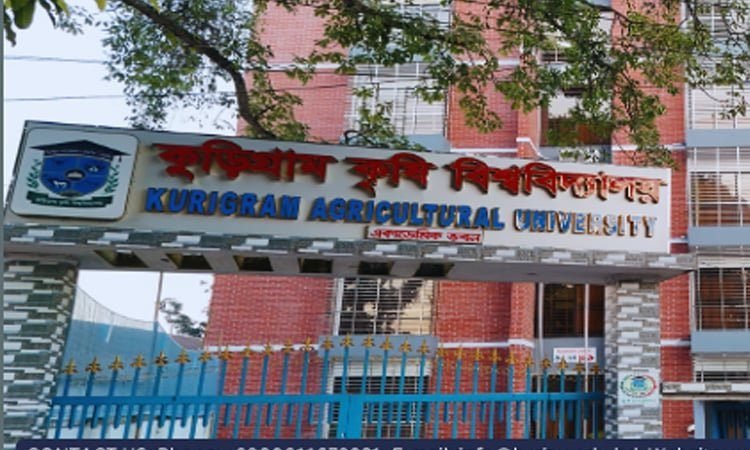
Kurigram Agricultural University weaving the northern region’s dream of agriculture

Photo: Collected
Kurigram Agricultural University began its journey on 22 September 2021 with the aim of advancing agricultural education, research and agriculture-based potential in the northern region. Although there have been various challenges since its establishment, including infrastructural limitations and a manpower shortage, academic and administrative activities have gradually gathered pace. The academic activities of three batches have already been launched. Various initiatives have also been taken in research, practical education, students’ skills development and social activities.
University sources said administrative and academic work gained new momentum after Prof Dr Md Rashedul Islam of Sher-e-Bangla Agricultural University took charge as vice-chancellor on 2 December 2024. Alongside running activities with limited manpower, the second meetings of the Academic Council and the Syndicate have also been completed. It was during his tenure that it became possible to launch the academic activities of three batches.
Earlier, Vice-Chancellor Prof Dr Md Rashedul Islam discharged various administrative responsibilities at Sher-e-Bangla Agricultural University, including student adviser, department head and assistant hall provost. In teachers’ politics, he was general secretary of the university’s Sada Dal. He has also served as an executive member of the central committee of the University Teachers’ Association of Bangladesh (UTAB), central office secretary of the Agriculturists’ Association of Bangladesh (AAB) and convener of its Kurigram Agricultural University unit. He also worked as a member of the six-member expert committee on prevention of dengue and mosquito-borne diseases formed by the Local Government Division.
The university’s academic activities began with the direct admission and orientation of students of the 2023-24 academic year. To reduce the suffering of students of the northern region, the university has also served as a centre for the agricultural cluster admission test. In the agricultural cluster admission test for the 2025-26 academic year, examinee attendance here was 94.69 percent. University sources said the institution was third among the nine agricultural universities in terms of attendance. Meanwhile, the results of the first batch have been published and the academic and admission activities of the other batches are under way.
Alongside education, international links have also been built in research. Joint education and research activities have begun with Charles Sturt University of Australia. The university has also received a special grant from Southeast Bank for research. In the light of the Outcome Based Education method, field-level training and field trips are being organised in various areas, including agronomy and fish farming, to give students real-life experience of agriculture.
Alongside academic education, importance is also being given to developing students’ social, cultural and leadership skills.
Discussion meetings and rallies have been organised to mark the great Independence Day, Victory Day, International Mother Language Day, Martyred Intellectuals Day and in remembrance of the July mass uprising. Nabanna Utsab and Pahela Baishakh are celebrated to connect students with indigenous culture and heritage. Social initiatives such as distribution of winter clothes and receptions for meritorious students have also been taken.
Alongside awareness seminars to prevent drugs and ragging on the campus, residential hall facilities have been ensured for students. Various clubs have been launched to enhance skills through language, debate and scouting. The Language Club is working to enhance students’ communication and language skills, the Debating Club to build the capacity for reason-based thinking and debate, and the Scouts to create discipline, a sense of responsibility and a mindset of social service.