


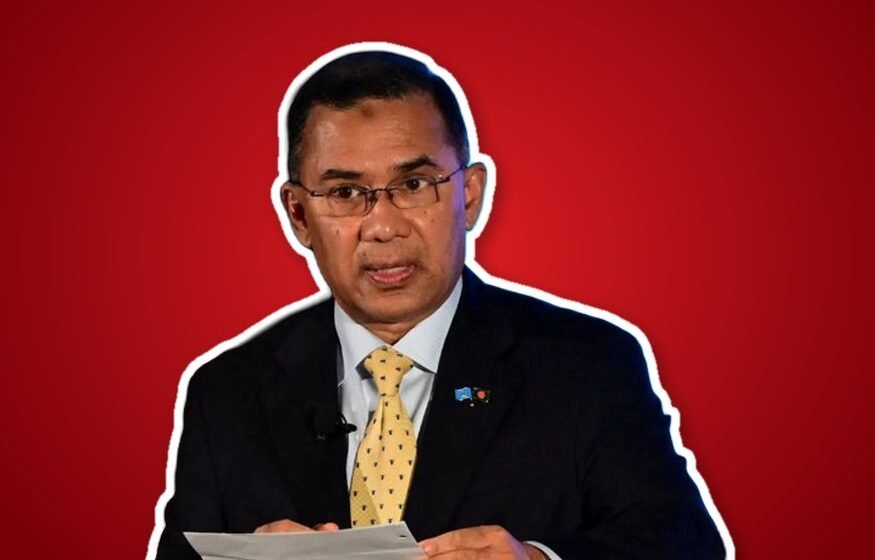

Photo: Collected
Prime Minister Tarique Rahman has called upon world leaders to build a safer and more sustainable world for the next generation.
The prime minister said, ‘Come, let us work together and build a safer and more sustainable future for future generations.’
To tackle the risks of climate change, he stressed ensuring accessible financing for climate-vulnerable countries, keeping global warming within 1.5 degrees Celsius, increasing access to climate-smart technology, expanding the use of renewable energy and full implementation of the loss and damage fund.
The prime minister said this at a high-level meeting titled ‘Climate Action and the Just Transition’ at the Trusteeship Council of the United Nations Headquarters this afternoon, local time. The meeting was held at the initiative of UN Secretary-General Antonio Guterres.
The prime minister said Bangladesh’s share in the world’s total greenhouse gas emissions is less than even 0.5 per cent; yet Bangladesh is one of the most vulnerable countries in the world due to climate change.
He warned that as the sea level continues to rise, 12 to 18 per cent of Bangladesh’s coastal areas could go under water by the end of this century. This will harm the livelihoods of crores of people, and the country’s food security will also fall into serious risk.
Mentioning that the loss and damage caused by climate change is equal to about 1 per cent of Bangladesh’s GDP, the prime minister said an allocation of about $3.19 billion has been kept for climate adaptation in this year’s budget. However, it will not be possible for Bangladesh to avoid the risk of major damage without international assistance.
The prime minister said Bangladesh has taken a plan to plant 25 crore trees in the next five years. The work of excavating about 20 thousand kilometres of rivers and canals is under way with the aim of conserving water, reducing flood risk, reviving wetlands and recharging groundwater. The work of implementing the master plans of the Padma Barrage and the Teesta Barrage is also progressing.
He said a target has been set to meet 20 per cent of the country’s electricity demand from renewable energy by 2030. Alongside this, the government is working to expand green industries, including jute products, environment-friendly transport, waste-to-energy production and circular economy initiatives. An initiative has also been taken to build a national carbon market.
In his view, it is not possible for Bangladesh alone to achieve these targets. Collective initiative on the basis of the principle of ‘common but differentiated responsibilities and respective capabilities’ is now indispensable.
He called for five urgent steps to tackle the climate crisis. First, greenhouse gas emissions have to be reduced across the world to maintain the global warming limit of 1.5 degrees Celsius set in the Paris Agreement.
Second, predictable and accessible financing has to be ensured for the adaptation sector of climate-vulnerable countries.
Third, a path of fair and equitable climate transition has to be created by increasing access to climate-smart technology.
Fourth, the use of renewable energy has to be increased through accessible financing, capacity building and technology transfer.
Finally, he called for regular replenishment of the loss and damage fund alongside ensuring its full implementation.
The prime minister said Bangladesh expects such partnership as will be helpful in implementing the country’s climate plans.
Prime Minister Tarique Rahman is currently staying in New York to attend the 81st session of the United Nations General Assembly. He will speak on behalf of Bangladesh in the general debate on 24 September.