
Photo: Collected
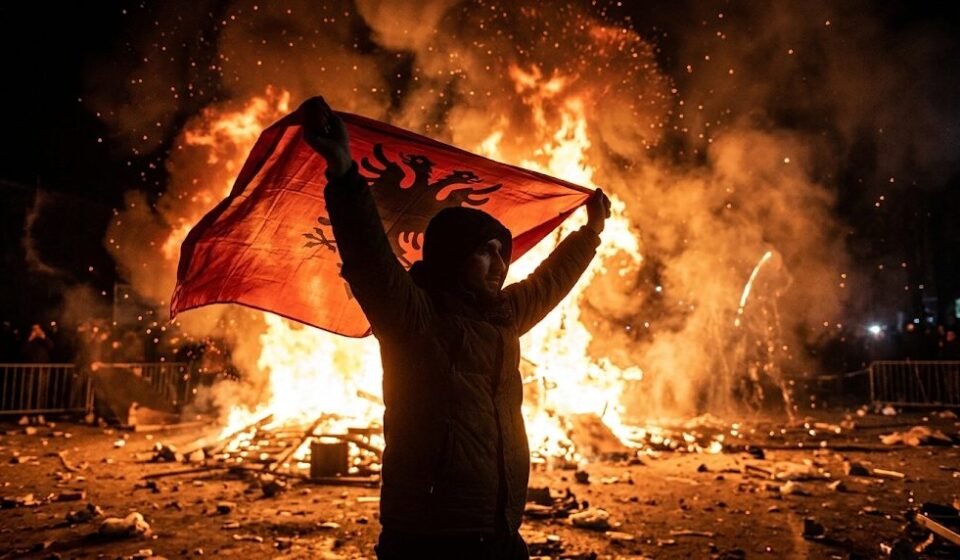
Clashes between protesters and riot police have spread to the main cities of Albania, including the capital Tirana, centring on anti-government demonstrations. Alongside arson and vandalism at government buildings, some private establishments have also been attacked. The movement, which began over education costs and the rising cost of living, at one stage took a violent turn.
The BBC reported on Friday (16 October) that the new protests began as a continuation of the ‘Flamingo’ movement that has been going on in Tirana for several months. Secondary school students joined university students in the movement, which began on Tuesday. The main demands of the protesters were a reduction in education fees and the price of books and effective steps by the government to tackle the cost of living.
At one stage, when masked protesters began hurling stones at the police, the police responded with water cannon, tear gas and baton charges. Several police members were injured in the clashes. The sight of a young man in agony with a broken leg being carried away further inflamed the protesters’ anger; although an apology was later expressed, the situation did not calm down. A floor of the education ministry was set on fire, and reports of arson came in from other government installations as well.
The Flamingo movement had its origins in the plan for a huge tourism project on Albania’s Adriatic coast. Protesters expressed fears that the project, which is linked to Jared Kushner, son-in-law of US President Donald Trump, could endanger the existence of flamingos on an island near the Vlora coast. For about 140 days in a row, they demanded the resignation of Prime Minister Edi Rama on summer evenings holding pictures of pink flamingos.
The anger of the movement, however, is not confined to environmental concerns. Allegations of corruption at the highest levels of government have also fuelled public discontent. One deputy prime minister has left the country while an investigation is under way, and another has been instructed to quit the post.
The protesters say that even after five months of peaceful protest they have not received an appropriate response from the government. A young woman named Livia said their protest was met with insults and ridicule. Another young woman named Brunela expressed her apprehension, saying this was not merely her personal voice but the protest of Albania’s young generation.
Prime Minister Rama has blamed opposition leader and former prime minister Sali Berisha for the violence. There is scepticism, however, about his direct role behind the protests. Allegations of the involvement of foreign powers have also been raised, although no reliable evidence has been published in support of these claims. Rejecting the demand for his resignation, Rama has said the government will take steps on legitimate concerns.
Europe is now watching the situation in Albania, a country aspiring to European Union membership. Although travel by tourists to the country has not been completely halted for now, the United Kingdom government has been advised to avoid protests, political rallies and large gatherings. It is feared that the continuing violence may have a negative impact on the country’s tourism industry and its aspiration to join the European Union.