Don’t delay if you see stroke symptoms: treatment within 4.5 hours raises chances of survival

Photo: Collected
A stroke is an emergency health problem in which timely and correct treatment can save a person’s life and also reduce the risk of long-term disability. Yet in reality, even after symptoms appear, patients or family members often cannot figure out what to do. Some wait for the symptoms to subside, while others try first aid at home. In the case of stroke, such delays are more likely to be dangerous.
There is a widely used saying in medical science: ‘Time is burning’. It means every moment of delay can damage more brain cells. So as soon as symptoms appear, the patient must be taken to a hospital with appropriate emergency treatment facilities.
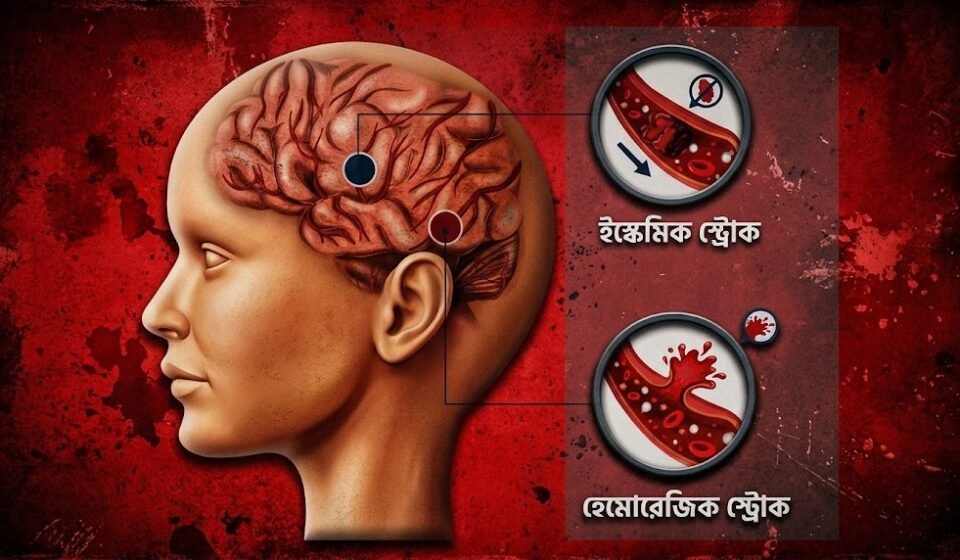
Strokes are mainly of two types: ischaemic and haemorrhagic. In an ischaemic stroke, a blood vessel in the brain is blocked by a blood clot or some other cause. In a haemorrhagic stroke, a blood vessel ruptures and bleeds into the brain. Brain cells depend on oxygen- and nutrient-rich blood to function normally; if the blood supply is disrupted, the cells can be damaged quickly. The treatment for the two types of stroke is different. So it is essential to do an emergency brain CT scan to see whether there has been bleeding in the brain and to quickly decide on the right treatment.
In an ischaemic stroke, the treatment of dissolving the blood clot by giving a suitable patient medicine through a vein is called intravenous thrombolysis. The 2026 guidelines of the American Heart Association and the American Stroke Association recommend treatment with alteplase or tenecteplase within the first 4.5 hours of symptom onset for suitable adult patients. For such patients, it is important to start treatment quickly without needlessly wasting time on additional imaging tests.
It is not that all options are closed once the first 4.5 hours have passed. If advanced imaging tests can identify a part of the brain where restoring blood flow is likely to be beneficial, thrombolysis can be considered even between 4.5 and 9 hours after symptom onset. For some patients whose stroke symptoms appear after waking up, this treatment may also be an option if specific imaging and clinical criteria are met. However, a specialist doctor will decide which patient is suitable and what the treatment will be.
If a clot is lodged in a large blood vessel of the brain, in selected patients it can be removed with a special device through mechanical thrombectomy. Suitable patients are usually given this treatment within the first 6 hours of symptom onset. If specific clinical and imaging criteria are met, thrombectomy is possible in selected patients even between 6 and 24 hours.
Even if there is a delay in reaching hospital, it is essential to check whether treatment is still possible. In the case of bleeding in the brain, other treatments may be needed, including blood pressure control, managing the effects of medicines that can increase bleeding and, if necessary, surgery.
Keeping high blood pressure, diabetes and cholesterol under control, quitting smoking, regular physical activity, cutting excess salt in food, eating a balanced diet including vegetables and fruit, and maintaining a healthy weight help reduce the risk of stroke. Taking medicine as advised by a doctor and having regular health check-ups are also important.
After a stroke, many patients suffer weakness in their arms and legs, have difficulty speaking, or need help from others with walking and daily tasks. In this situation, medicine alone is not enough; rehabilitation suited to the patient’s condition and needs is equally important.
Through physiotherapy, speech practice, treatment for swallowing difficulties and training to regain the ability to carry out daily tasks, efforts are made so that the patient can move about and live independently. Once the patient’s condition is stable, appropriate rehabilitation should begin on a doctor’s advice.
Writer: Consultant and Coordinator, Department of Neurology, Evercare Hospital, Chattogram
By the numbers
According to a Prothom Alo report on 6 March 2024, a study by United International University found 1.07 per thousand people in the country affected by stroke; among the divisions, the rate was highest in Khulna (1.77) and lowest in Rangpur (0.62).
Citing data from the Directorate General of Health Services’ MIS, the same report said 20,661 people died of stroke in government hospitals in 2023.
Sources
Original report: Ajker Patrika
Background sources: Prothom Alo, 6 March 2024