
Photo: Collected
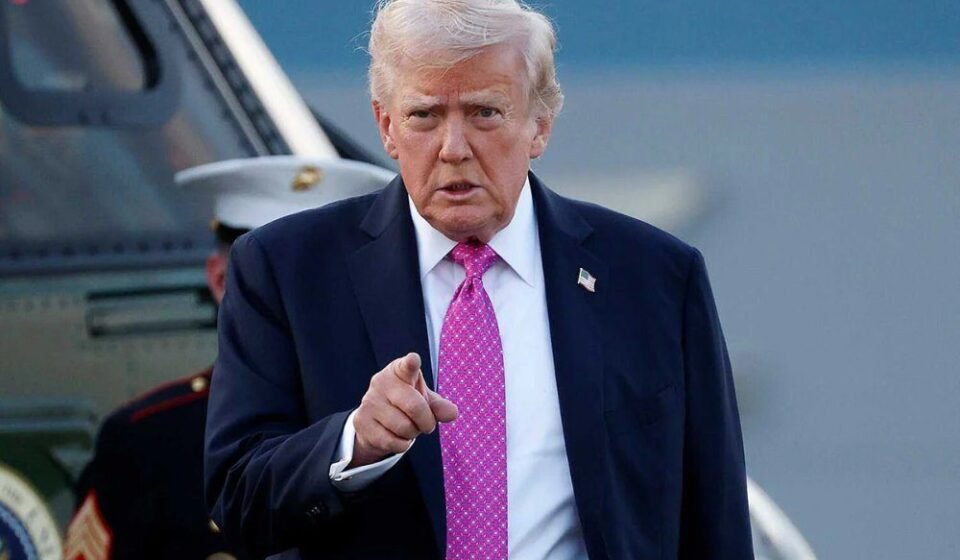
US President Donald Trump is in no hurry to respond immediately to Iran’s proposal to reopen the Strait of Hormuz within seven days.
US officials have told Al Jazeera that Washington does not want to reach any decision on Tehran’s proposal right now.
Analysts say that although a fall in fuel and oil prices is important for Trump, he also wants to show that he is in no rush to accept Iran’s proposal.
Paul Musgrave, an associate professor at Georgetown University in Qatar, told Al Jazeera, ‘President Trump would certainly want oil and petrol prices to come down. But at the same time he wants to convey that he is not rushing on this.’
According to Musgrave, Trump would not want to end the war on any terms that risk losing the advantages the United States has gained from the current state of the war. In other words, in an understanding with Iran, Washington wants to hold on to a position in which the advantages gained through military and economic pressure are not lost at the negotiating table.
Iran recently said that if the United States reduces military pressure and lifts the blockade imposed on Iran, an initiative could be taken to reopen the Strait of Hormuz within seven days. A huge volume of crude oil and fuel is transported through this strait, one of the world’s most important energy shipping routes. As a result, there are fears of major instability in the international energy market if the route remains closed for long.
However, Washington does not see Iran’s proposal merely as the result of economic pressure. In Musgrave’s analysis, Israel’s internal political situation is also playing a big role in determining the course of the war.
He said there is uncertainty over the future of Israel’s current ruling coalition. As a result, the pressure there is more to continue the war than to end it quickly. In particular, he believes there is a tendency in Israeli politics to continue the war on the questions of keeping the settlement of the dispute over Iran’s nuclear programme on hold and of not withdrawing from Lebanon.
Musgrave said, ‘If people think that Iran is actually trying for an understanding because of economic pressure, then to Washington this could mean that it is time not to ease the pressure but rather to press even harder right now.’
In other words, the Trump administration may regard Iran’s economic weakness and the crisis created around the Strait of Hormuz not only as an opportunity for negotiation but also as a reason to further increase pressure on Tehran.
Meanwhile, as the stalemate over the Strait of Hormuz continues, it is also having an impact on the international energy market. If the crisis is prolonged, the supply of oil and fuel may be disrupted and transport costs may rise, which could deal a blow to the world economy.
As a result, the Trump administration wants to move forward by striking a balance between the two: keeping fuel prices under control on the one hand, and extracting more concessions from Iran on the other. So Washington’s next step on Iran’s seven-day proposal could become crucial in determining the future of the Strait of Hormuz and the course of the ongoing war.
Source: Al Jazeera