


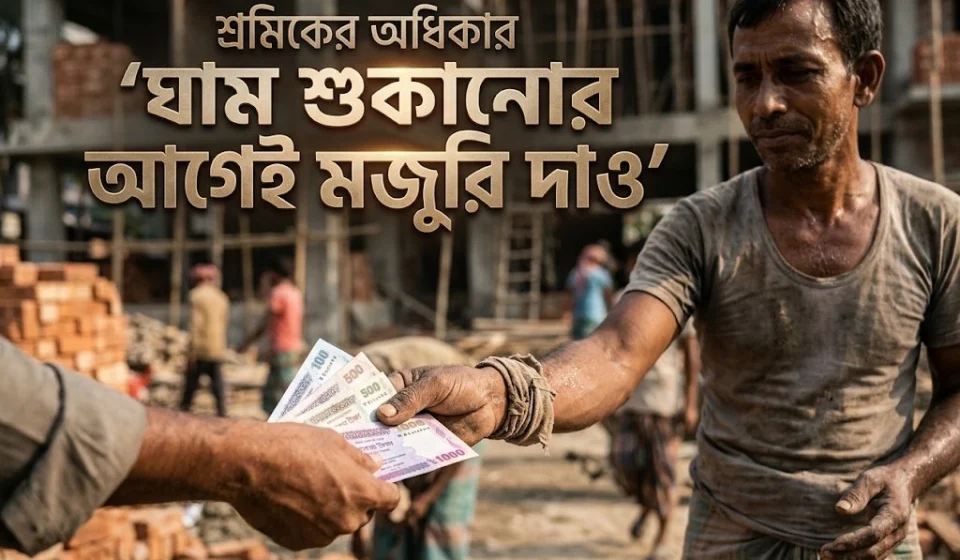

Photo: Collected
Labour is one of the main means of earning a living. A worker contributes to family and society through his talent, time and physical strength. Yet the sad reality is that these hard-working people’s rightful dues are often denied; failing to pay on time or paying less than agreed happens all the time. Islam, however, has given very clear and strict guidance on establishing workers’ rights.
Islam recognises labour as a most honourable undertaking. In the Holy Quran, Almighty Allah says, ‘And that there is not for man except that for which he strives.’ (Surah An-Najm: 39)
This verse makes clear that every act and effort of a person has its own value. Therefore, properly valuing a worker’s sweat and toil is the moral and religious duty of every employer.
The beloved Prophet Hazrat Muhammad (pbuh) issued a stern warning about paying workers’ wages on time. He said, ‘There are three people whose opponent I will be on the Day of Resurrection. One of them is a man who hires a worker, takes full work from him, yet does not pay him his wages.’ (Sahih Bukhari: 2227)
In another well-known hadith, the Messenger of Allah (pbuh) said even more clearly, ‘Give the worker his wages before his sweat dries.’ (Sunan Ibn Majah: 2443)
Many people in various professions now depend on daily wages to support their households. If even one day’s pay is held up, the whole family faces an acute shortage of food and medical care. So it is the employer’s duty to make the wage clear at the start of the work and pay it on time. The worker’s duty is no less — to carry out the work entrusted to him with honesty and dedication. In an Islamic social system, the rights of both employer and worker are equally protected.
Sources
Original report: Ajker Patrika