


Photo: Collected
Leaders of BGMEA and BKMEA, the two organisations of garment factory owners, have urged workers to withdraw the ongoing protests, return to work and maintain peace in the industrial areas. They also assured that the minimum wage for readymade garment workers will be implemented quickly.
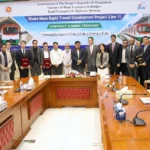
Bangladesh Garment Manufacturers and Exporters Association (BGMEA) president Mahmud Hasan Khan and Bangladesh Knitwear Manufacturers and Exporters Association (BKMEA) president Mohammad Hatem said this at a press conference in the conference room of the Ministry of Labour and Employment in the capital on Wednesday.
They said the newly formed minimum wage board has already held its first meeting. A deadline was also set at that meeting for completing the wage review.
The leaders claimed that the wage review process is moving much faster this time than ever before. Factory owners will implement the new wage structure within the board’s set timeframe.
BKMEA president Mohammad Hatem said the first meeting was held just three days after the wage board was formed, which is unprecedented in the country’s labour history. The board’s second meeting has been fixed for 9 November, just four days after the first. He believes this reflects the government’s sincerity and swift action in settling the workers’ demands.
Hatem warned that continued unrest in the industrial areas would harm workers, the garment industry and the national economy. He also asked workers not to take the law into their own hands.
The garment industry leaders also voiced fears that some vested quarters could take advantage of the situation to create unrest in the industrial areas. In their view, this could hamper the ongoing effort to settle workers’ demands through institutional dialogue.
BKMEA has also made several proposals to the government to improve workers’ living standards. One is strict enforcement of the house rent control law in industrial areas, so that landlords cannot raise rents at will by taking advantage of wage increases.
The other proposals include introducing rationing facilities or family cards for garment workers, setting up specialised hospitals to ensure affordable healthcare in industrial areas, and building dedicated housing or dormitories for workers in the main industrial hubs.
The leaders said the government, owners and responsible workers’ organisations are working together to protect workers’ interests and find a sustainable solution to wage-related problems.
They urged workers to be patient, to have confidence in the wage board’s work and to return to their workplaces immediately to keep production normal.
They said that if a peaceful environment prevails in the industrial areas, the wage board will be able to complete its work smoothly. This will bring positive results for workers and owners alike, and for the national economy.
Background
According to a Jago News report of 1 November, the government decided to form a new wage board amid garment workers’ protests demanding a minimum monthly wage of Tk 30,000.
Dhaka Times reported on 1 November that Labour and Employment Minister Ariful Haque Chowdhury announced the six-member wage board at the Secretariat that day.
By the numbers
According to a bdnews24.com report of 26 November 2023, the minimum wage for garment workers was raised by 56.25 percent to Tk 12,500 in 2023.
Sources
Background sources: Jago News, 1 November 2026; Dhaka Times, 1 November 2026; bdnews24.com, 26 November 2023